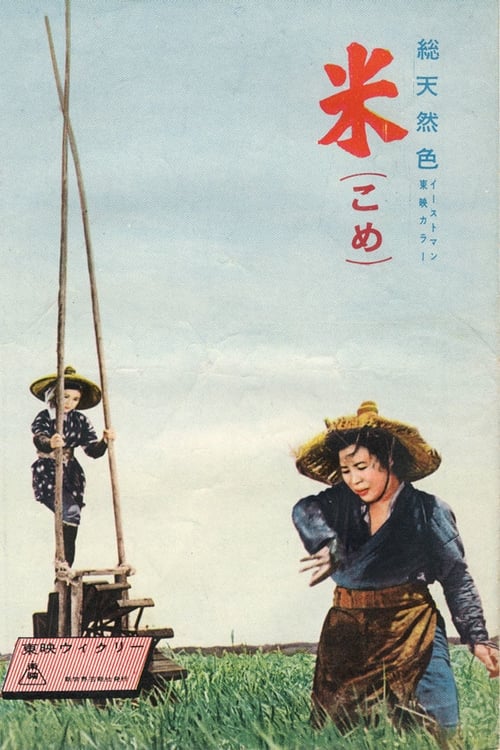
Rice
1957
No user ratings available yet
Representation score: 2.6 out of 10

Representation Score
Limited
1975
Director
Yoji Yamada
Runtime
127 minutes
Average Rating
No ratings yetNew Showbiz Analysis
Yoji Yamada’s drama offers a detailed, realistic portrayal of the struggles faced by peasants during the late Edo period. Despite a lack of diverse representation, the film provides a nuanced critique of feudal power structures and systemic oppression. The narrative centers on the everyday lives of the lower classes. It dismantles the myth of a benevolent ruling class by illustrating how the Shogunate’s failures affect the underrepresented community. Ultimately, the film serves as a localized historical study. Its absence of modern identity representation is reflective of its specific setting rather than a lack of narrative depth.
Category Breakdown
The film does not include any queer themes or non-cisgender identities within the community.
Women play significant roles in managing the household and ensuring the community's survival. However, their actions are constrained by the patriarchal society of the 19th century.
The cast is ethnically uniform, reflecting the isolated nature of rural Japan during that time. The film focuses on a specific Japanese demographic.
The story criticizes the Shogunate and samurai class for failing to protect the peasants. It highlights the community's resilience against economic hardship and rigid class structures.
Physical weakness is shown as a result of famine and poverty. The film does not specifically address neurodivergence or disabilities.
Present on Screen
Limited or Absent
Official Synopsis
This appears to be a labor of love. Its about a village which is given the opportunity to put on a musical. They would have to pay the overhead and, being that they are farmers and always busy and not rich, question the wisdom and feasibility of such an idea. A spokesperson for the acting troupe Ms. Kono lays out the whole thing and they must decide. You get little slices of rural life in Japan far, at least in sentiment, from Tokyo. The best thing about this film is that it has heart. The acting is good, but it is really about the simple storyline of outing on a show. Films rarely get made with such simplistic plots these days. Enjoy this little slice of what city people call “the simple life”.
1957
1960
1972

2015
1980
1959
2002
1993
No reviews yet. Be the first to share your thoughts on this movie!
Use the rating form above to leave a star rating and optional review.