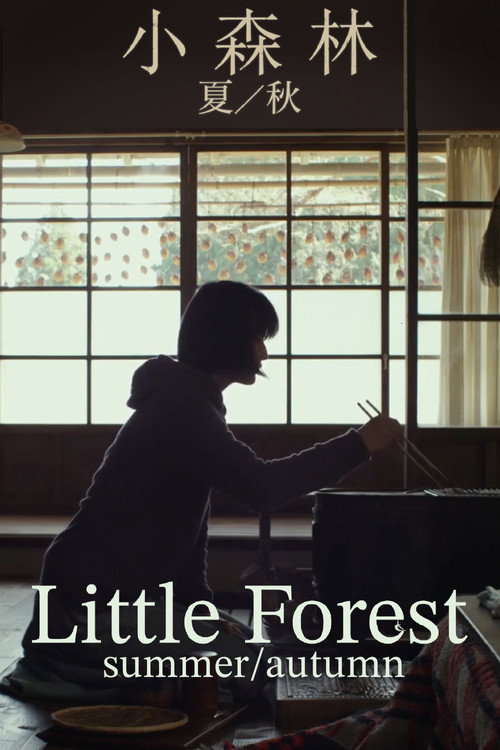
Little Forest: Summer/Autumn
2014
No user ratings available yet
Representation score: 3.1 out of 10
Representation Score
Good
2015
Director
Junichi Mori
Runtime
120 minutes
Average Rating
No ratings yetNew Showbiz Analysis
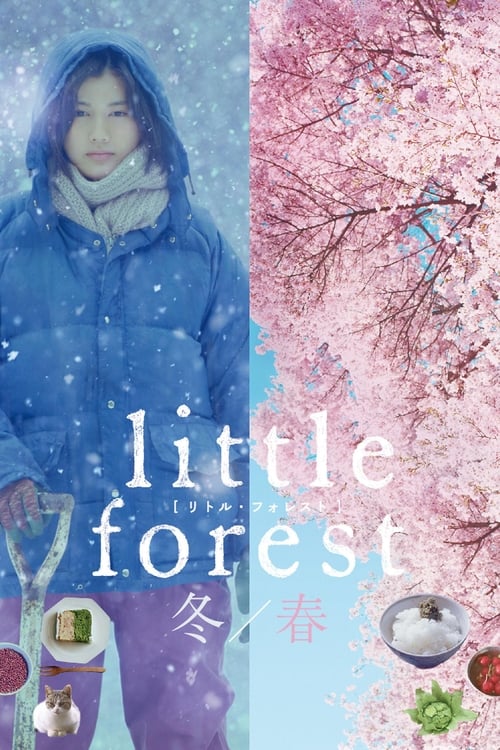
Little Forest: Winter/Spring is a contemplative exploration of rural self-sufficiency that challenges traditional gender roles. By focusing on a female protagonist's autonomy, it rejects the need for male providers. However, the film operates within a limited demographic scope. It lacks LGBTQ+ representation and racial diversity, focusing instead on a culturally uniform regional identity. Ultimately, the film's progressive value lies in its critique of modern consumerism. It replaces urban, institutionalized norms with a sophisticated, nature-centric lifestyle.
Category Breakdown
The film does not include any LGBTQ+ characters or explore non-straight relationships. It focuses solely on the protagonist's relationship with her environment and her personal journey.
Ichiko is portrayed as a self-reliant woman who manages her own survival and household tasks. By removing traditional male protector roles, the film highlights female competence and intellectual independence.
The cast is culturally uniform, emphasizing a specific regional identity. The film delves deeply into local heritage through seasonal traditions rather than showcasing a diverse range of backgrounds.
The narrative challenges urban capitalism by presenting seasonal, manual labor as a path to fulfillment. It prioritizes a nature-centric spirituality over institutional religion and modern societal pressures.
There are no explicit depictions of physical or neurodivergent disabilities. While the protagonist shows psychological resilience, disability is not a central narrative element.
Present on Screen
Limited or Absent
Official Synopsis
Ichiko bakes a cake for an end-of-year party with her friends. In the depths of winter, making mochi and curry keeps the people of Komori warm. Later, spring brings thoughts of her absent mother as well as rice planting and sakura, and she begins to think of leaving Komori behind again.
2014

1960
2015
2018

2015
2013
2017
2016
No reviews yet. Be the first to share your thoughts on this movie!
Use the rating form above to leave a star rating and optional review.