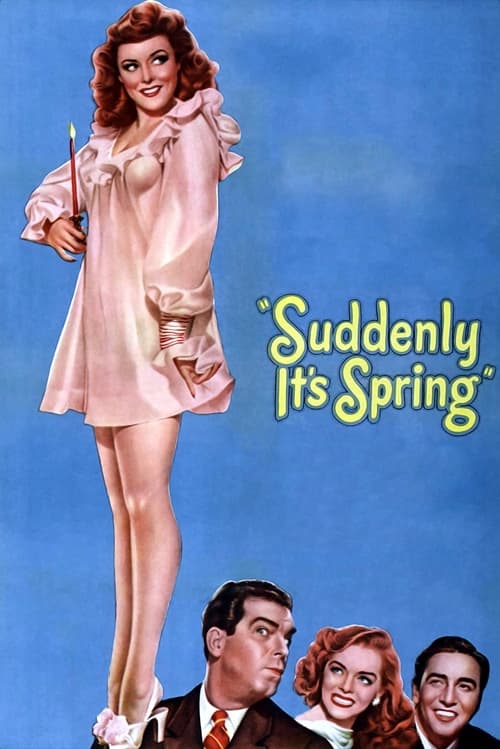
Suddenly It's Spring
1947
No user ratings available yet
Representation score: 0.4 out of 10

Representation Score
Minimal
1944
NRDirector
Harry Beaumont
Runtime
90 minutes
Average Rating
No ratings yetNew Showbiz Analysis
Maisie Goes to Reno is a quintessential product of the 1940s studio system, prioritizing escapism over social critique. Its primary strength lies in its subversion of gender norms through a central female character who possesses professional independence and personal influence. However, the film remains deeply conventional in its broader social structure. It lacks racial diversity and fails to represent LGBTQ+ identities or characters with disabilities, adhering strictly to the narrow focus on straight relationships and homogeneous standards of its time. Ultimately, while the protagonist offers a progressive model of female autonomy, the film's cultural and racial landscape remains largely unvaried and traditional.
Category Breakdown
The film focuses solely on heterosexual relationships and marriage laws. There are no depictions of non-straight identities or same-sex intimacy.
Maisie serves as a strong, independent protagonist who navigates her own divorce with significant influence. As a working nightclub singer, she challenges traditional domestic roles through her autonomy.
The cast appears largely homogeneous, reflecting the era's standard casting practices. There is a lack of significant racial or ethnic diversity in the production.
The story is centered on the entertainment industry and the social commerce of a resort town. It reinforces established social institutions rather than offering any critical perspective.
The narrative contains no visible or documented instances of characters with physical, sensory, or neurodivergent disabilities.
Present on Screen
Limited or Absent
Official Synopsis
A Brooklyn showgirl gets mixed up in a divorce between a soldier and his wife.
1947

1944

1947

1942
1943
1934
1941

1949
No reviews yet. Be the first to share your thoughts on this movie!
Use the rating form above to leave a star rating and optional review.