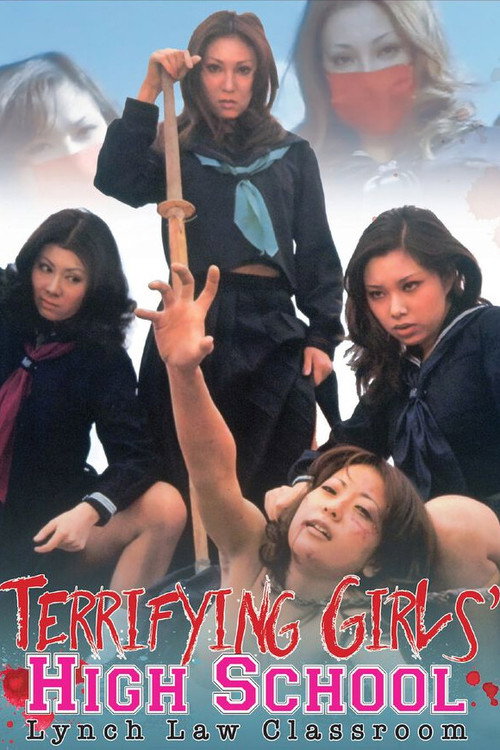
Terrifying Girls' High School: Lynch Law Classroom
1973
No user ratings available yet
Representation score: 5.7 out of 10
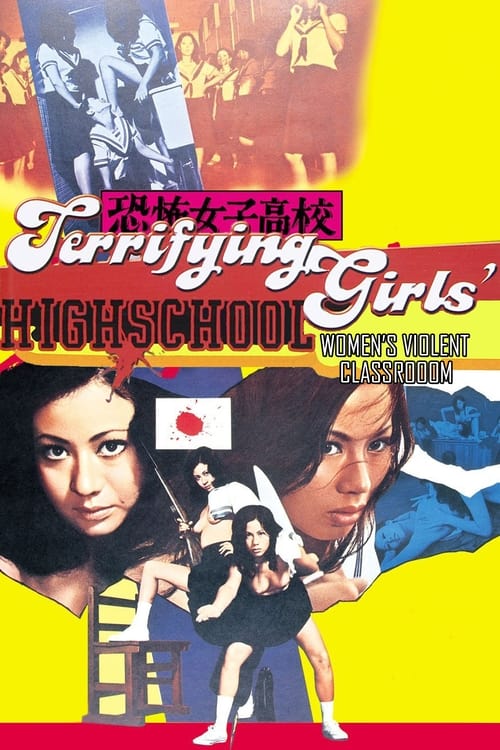
Representation Score
Fair
1972
Director
Norifumi Suzuki
Runtime
79 minutes
Average Rating
No ratings yetNew Showbiz Analysis
The film excels at disrupting traditional power structures by centering on female-driven ability to act. It effectively challenges the era's gender roles by positioning women in positions of strength against corrupt male authority figures. However, the film lacks diversity in racial and ethnic representation. It also does not include explicit LGBTQ+ identities or themes. Ultimately, the work provides a progressive critique of institutional corruption, even if its demographic scope remains narrow.
Category Breakdown
The film explores unconventional social dynamics typical of 1970s Japanese genre cinema. However, it does not explicitly confirm any queer identities or romantic relationships involving LGBTQ+ individuals.
The story emphasizes the role of women in driving the plot and challenges traditional submissive female archetypes. By placing a strong female protagonist against a predatory male official, it rejects outdated gender roles.
The production reflects its 1972 Japanese context and is culturally homogeneous. It does not include actors from diverse racial backgrounds or use race-bending casting techniques.
The narrative critiques institutional authority by depicting a school official as corrupt and exploitative. Rebellion is framed as a response to systemic oppression.
There are no identifiable depictions of physical or neurodivergent disabilities in the film's synopsis.
Present on Screen
Limited or Absent
Official Synopsis
Delinquent girl boss meets and conflicts with an orphan girl who lives an isolated life after the dramatic deaths of her parents. She plays the piano, but stands up against her lecherous guardian, who is also a school official.
1973

1972

1973

1973

1975

1972

1986

1971
No reviews yet. Be the first to share your thoughts on this movie!
Use the rating form above to leave a star rating and optional review.