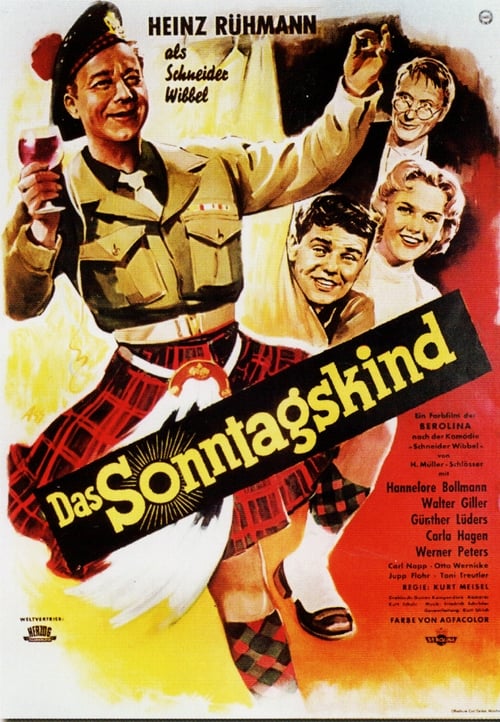
Das Sonntagskind
1956
No user ratings available yet
Representation score: 2.7 out of 10
No Poster Available
Representation Score
Minimal
1953
16Director
Joe Stöckel
Average Rating
No ratings yetNew Showbiz Analysis
Ehestreik is a product of the traditional social and cinematic frameworks of 1950s Austria. As a comedy from this era, it emphasizes conventional social hierarchies and demographic uniformity. The film lacks representation of diverse identities, focusing instead on the established social norms of the time. Its narrative structure is centered around the mainstream values of post-war Central Europe. Since the film adheres to the era's standard comedic formulas, it offers little in the way of challenging traditional roles or broadening the scope of its cast.
Category Breakdown
The film likely follows the straight-centered standards typical of 1950s Austrian comedy. There is no indication of queer narratives or non-cisgender identities.
The narrative likely upholds traditional gender roles and domestic duties. Comedic elements often depend on conventional portrayals of masculinity and femininity.
The production reflects the demographic uniformity of mid-century Austria. The cast is expected to be predominantly white and Eurocentric with limited ethnic diversity.
The film focuses on traditional community structures and the nuclear family. It likely celebrates or satirizes these institutions through a lens of traditional morality.
There is no verifiable evidence of characters with visible or invisible disabilities in the film's records.
Present on Screen
Limited or Absent
1956
1953
1961
1964
1941
1957
1964
1950
No reviews yet. Be the first to share your thoughts on this movie!
Use the rating form above to leave a star rating and optional review.