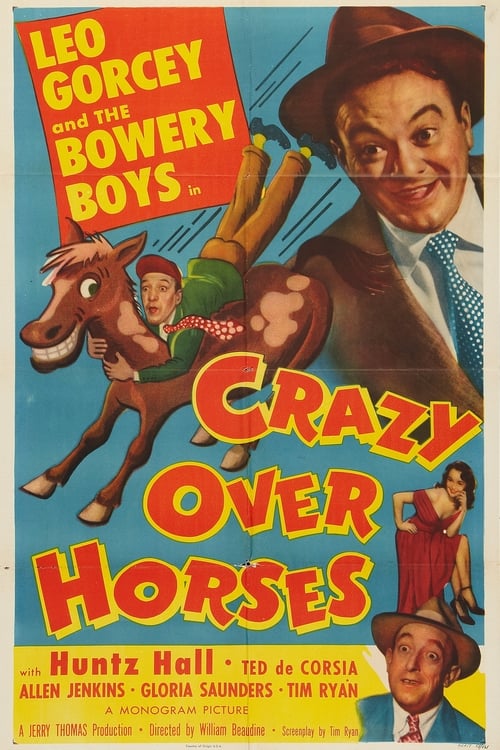
Crazy Over Horses
1951
No user ratings available yet
Representation score: 1.3 out of 10

Representation Score
Minimal
1947
ApprovedDirector
Arthur Dreifuss
Runtime
68 minutes
Average Rating
No ratings yetNew Showbiz Analysis
Sweet Genevieve is a classic mid-century comedy that emphasizes conventional social structures and traditional storytelling. Set in a small town, it explores minor conflicts like youthful rebellion and minor social disruptions. The narrative lacks complexity, avoiding engagement with or deconstruction of established social hierarchies. Instead, it presents a homogeneous and traditional view of society. Overall, the film is a typical example of mainstream 1940s entertainment, focusing on misunderstandings between characters rather than diverse or challenging perspectives.
Category Breakdown
The film does not depict any non-straight relationships or same-sex intimacy. Romantic subplots follow traditional heterosexual storylines typical of 1947 cinema.
Genevieve Rogers is the main character, but the key actions—like racing and racketeering—are mostly driven by male characters. This reflects a traditional gender hierarchy of the time.
The story takes place in a small town with a homogeneous social environment, typical of 1947 small-town comedies. There are no multi-ethnic characters or non-white actors driving the story.
The film treats minor social disruptions, such as horse betting, as comedic issues rather than serious problems. It upholds traditional community values by showing these activities as temporary disturbances.
The narrative does not include any characters with visible or invisible disabilities.
Present on Screen
Limited or Absent
Official Synopsis
The biggest town problem is worrying whether the high school basketball team will win the championship...until racketeers move into town and the kids begin to bet on horses, become overly fond of stripped-down racing cars, and Genevieve Rogers (Jean Porter) suspects her father of being too fond of the school principal's secretary. Town nerd Bill Kennedy (Jimmy Lydon) invents a new fuel amidst rumors that - horrors - the basketball game might be fixed. River City is not the only town that has trouble starting with a "T" and there's not a pool hall in sight.
1951
1928
1945
1942
1942
1956
1945
1945
No reviews yet. Be the first to share your thoughts on this movie!
Use the rating form above to leave a star rating and optional review.