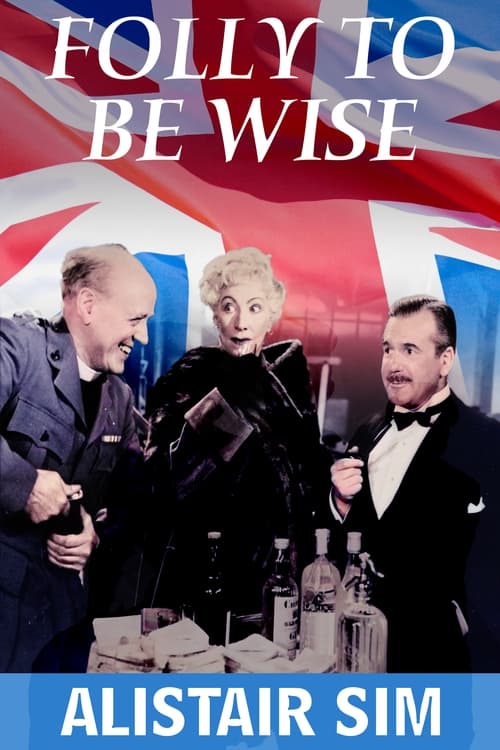
Folly to Be Wise
1952
No user ratings available yet
Diversity score: 2.6 out of 10
1950
Not RatedDirector
Frank Launder
Runtime
81 minutes
Average Rating
No ratings yetSynopsis
Nutbourne College, an old established, all-boys, boarding school is told that another school is to be billeted with due to wartime restrictions. The shock is that it's an all-girls school that has been sent. The two head teachers are soon battling for the upper hand with each other and the Ministry. But a crisis (or two) forces them to work together.
Overall Score
Minimal
Category Breakdown
LGBTQ+ Representation
The film contains no discernible LGBTQ+ characters or narratives. Social dynamics focus entirely on traditional courtship and gendered interactions typical of the 1950s.
Gender Representation
The plot disrupts the status quo by introducing an all-girls school into a male-dominated environment. While this challenges male hegemony, characters still operate within established mid-century gendered expectations.
Racial & Ethnic Diversity
The cast is overwhelmingly homogeneous, reflecting the era's social norms. There is no evidence of racial or ethnic diversity within the boarding school setting.
Religious & Cultural Diversity
The narrative celebrates traditional British institutions and the private school system. It reinforces the stability of Western social structures rather than offering a critique of them.
Disability Representation
There are no portrayals of visible or invisible disabilities. The comedic focus remains strictly on the interactions between able-bodied students and faculty.
Strengths
Areas for Improvement
AI Analysis
This comedy relies on the friction caused by merging two segregated educational institutions during wartime. While the central premise provides a temporary subversion of gendered spaces, the film remains deeply rooted in the social constraints of its era. The narrative lacks intersectional depth, presenting a highly homogeneous view of British society. It functions more as a celebration of institutional hierarchy than a progressive exploration of identity. Ultimately, the film reinforces traditional norms. The disruption of the all-male environment serves as a comedic engine rather than a systemic challenge to the status quo.
1952
1960
1980
1954
1957
1950
1950
1957
1947
1938
1961
1960
No reviews yet. Be the first to share your thoughts on this movie!
Use the rating form above to leave a star rating and optional review.