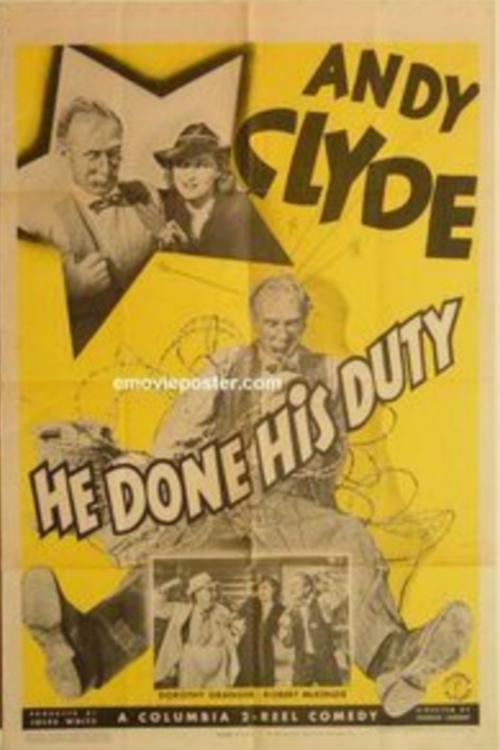
He Done His Duty
1937
No user ratings available yet
Diversity score: 1.8 out of 10

1933
PassedDirector
Charles Lamont
Runtime
18 minutes
Average Rating
No ratings yetSynopsis
Sonny Rogers has just gotten elected class president, he's a star baseball player, and has a cute girlfriend. But, thanks to the conniving of his rival, Harry Vanderpool, he and his whole family are going to have to move to Seattle! Sonny needs the help of his pals and his pesky little sister, Mary Lou, to get out of this one.
Overall Score
Limited
Category Breakdown
LGBTQ+ Representation
The film focuses on a conventional romantic pairing between the protagonist and his girlfriend. There is no indication of non-cisnormative identities or any critique of heteronormativity.
Gender Representation
The story centers on a male protagonist's leadership and athletic success. Female characters, like the sister Mary Lou, appear to serve as secondary plot devices to support male agency.
Racial & Ethnic Diversity
The narrative lacks any mention of a diverse cast or the subversion of casting norms. It appears to reflect the homogeneous social structures typical of 1930s Hollywood.
Religious & Cultural Diversity
Themes revolve around traditional institutions like the nuclear family and school hierarchies. The plot emphasizes social stability and personal rivalry rather than cultural or systemic critique.
Disability Representation
There is no evidence of characters with visible or invisible disabilities. The narrative focuses entirely on adolescent social dynamics and familial disruption.
Strengths
Areas for Improvement
AI Analysis
What's to Do? is a period-typical comedy that reinforces the social and gender hierarchies of the early 1930s. The narrative follows a standard hero's journey centered on a male protagonist's struggle to maintain his social standing and residence. The film lacks intersectional agency or any attempt to subvert contemporary social norms. Instead, it relies on conventional storytelling tropes, focusing on domestic and scholastic frameworks that prioritize traditional values of familial cohesion and social stability. Ultimately, the work functions as a standard studio-era comedy. It provides a window into the homogeneous casting and narrative structures prevalent in early sound-era filmmaking.
1937
1935
1931
1935
1941
1950
1943
1939
1936
1935
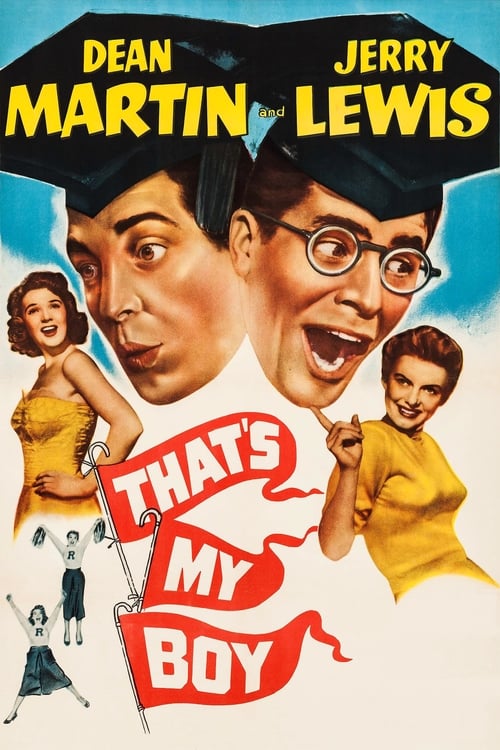
1951
1936
No reviews yet. Be the first to share your thoughts on this movie!
Use the rating form above to leave a star rating and optional review.