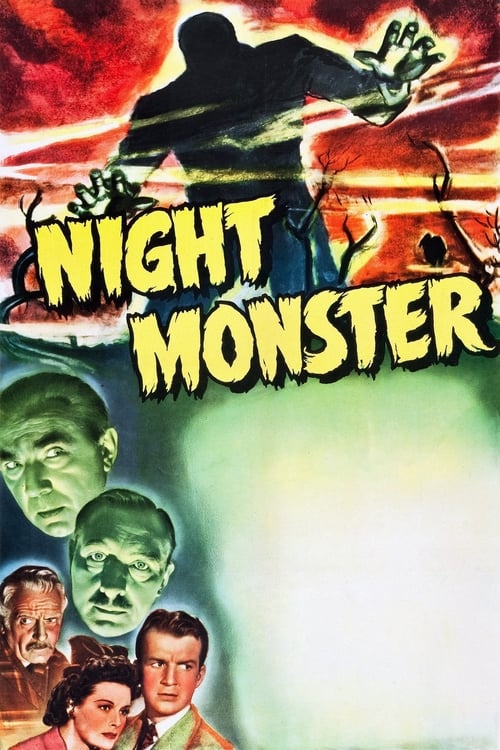
Night Monster
1942
No user ratings available yet
Diversity score: 2.2 out of 10

1942
NRDirector
Leslie Arliss
Runtime
79 minutes
Average Rating
No ratings yetSynopsis
Two teachers, man-hungry Doris and restrained Marian, visit the Yorkshire moors a year after friend Evelyn disappeared there. On a stormy night, they take refuge in the isolated cottage of Stephen, one-time pianist shell-shocked in the Spanish Civil War. Doris flees as soon as the flood subsides; but Marian's suspicions about Evelyn's fate, in conflict with her growing love for Stephen, prompt her to stay on among the misty bogs.
Overall Score
Limited
Category Breakdown
LGBTQ+ Representation
The film lacks any identifiable LGBTQ+ characters or non-heteronormative identities. Interpersonal dynamics focus exclusively on traditional romantic interests and heterosexual tension.
Gender Representation
Female protagonists drive the investigation, yet they are framed through narrow archetypes of being 'man-hungry' or 'restrained.' The male lead remains the central psychological gravity of the story.
Racial & Ethnic Diversity
The cast is entirely homogeneous, reflecting the historical context of a 1942 British production. There is no evidence of racial or ethnic diversity within the Yorkshire moors setting.
Religious & Cultural Diversity
The narrative operates within a traditional Western framework, utilizing local superstition to build tension. It avoids critiquing Western institutions or exploring moral relativism.
Disability Representation
Stephen’s shell-shock provides a depiction of psychological trauma from war. However, this invisible disability primarily serves as a plot catalyst rather than a nuanced study of agency.
Strengths
Areas for Improvement
AI Analysis
The film is a product of its 1942 temporal milieu, functioning as a standard genre piece that adheres to established social hierarchies. While it features female leads, their characterizations rely on period-typical archetypes rather than subverting gender norms. Representation is largely absent, with a homogeneous cast and a lack of LGBTQ+ identities. The inclusion of psychological trauma through the male lead offers a glimpse into disability, but it remains tethered to traditional melodrama tropes. Ultimately, the work prioritizes atmospheric suspense and conventional mystery over the deconstruction of social or demographic norms.
1942

1969
1943
1975

1966
1941
1928

1928
1945
1943

2009
2001
No reviews yet. Be the first to share your thoughts on this movie!
Use the rating form above to leave a star rating and optional review.