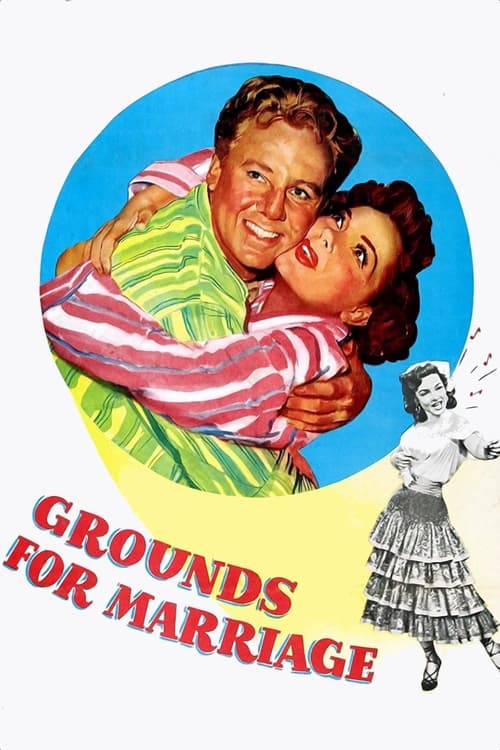
Grounds for Marriage
1951
No user ratings available yet
Representation score: 1.6 out of 10

Representation Score
Minimal
1949
ApprovedDirector
Edmund Goulding
Runtime
98 minutes
Average Rating
No ratings yetNew Showbiz Analysis
This 1949 comedy adheres closely to the social norms and narrative conventions of its time. The story focuses on a traditional romantic triangle and class-based motivations, offering little in the way of progressive subversion. The film lacks intentionality regarding diverse representation and relies on conventional gender roles and a homogeneous cast, reflecting the storytelling norms of its era.
Category Breakdown
The film focuses on a traditional heterosexual love triangle and does not include any representation of LGBTQ+ identities or critiques of heteronormativity.
The story revolves around a wife's pursuit of independence through her career in opera, while the plot is driven by male professional and romantic issues.
The film features a predominantly white cast, typical of 1949 Hollywood productions, with no indication of diverse ethnic representation.
The themes are centered around mid-century Western social structures, emphasizing class and marriage. The film upholds traditional values without challenging them.
There is no information about the depiction of physical or neurodivergent characters in the film.
Present on Screen
Limited or Absent
Official Synopsis
Leonard Borland loves his monied wife, but with his wrecking business looking shaky he treasures her all the more. So when she decides to try again to become an opera singer he indulges her. While organising a concert for her he meets glamorous Cecil Carver. She in turn discovers Leonard has a splendid voice, and encourages him to use it for reasons very much her own.
1951
1934
1937
1933
1941
1954
1951
2015
No reviews yet. Be the first to share your thoughts on this movie!
Use the rating form above to leave a star rating and optional review.