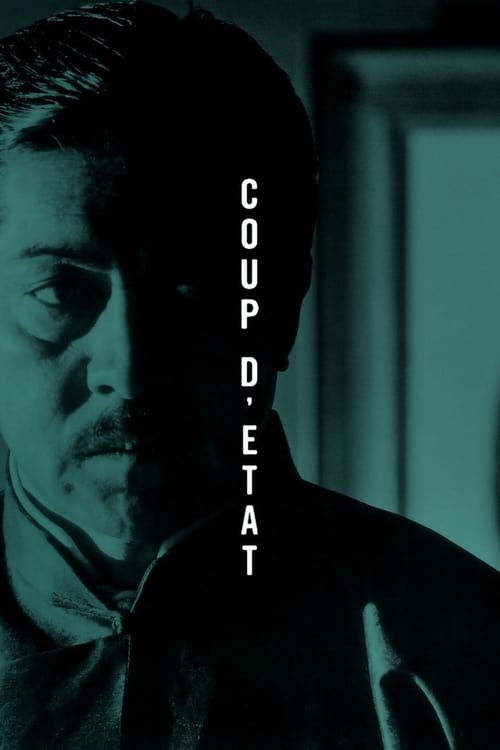
Coup d'Etat
1973
No user ratings available yet
Representation score: 8.5 out of 10
Representation Score
Fair
2001
Director
Banmei Takahashi
Runtime
130 minutes
Average Rating
No ratings yetNew Showbiz Analysis
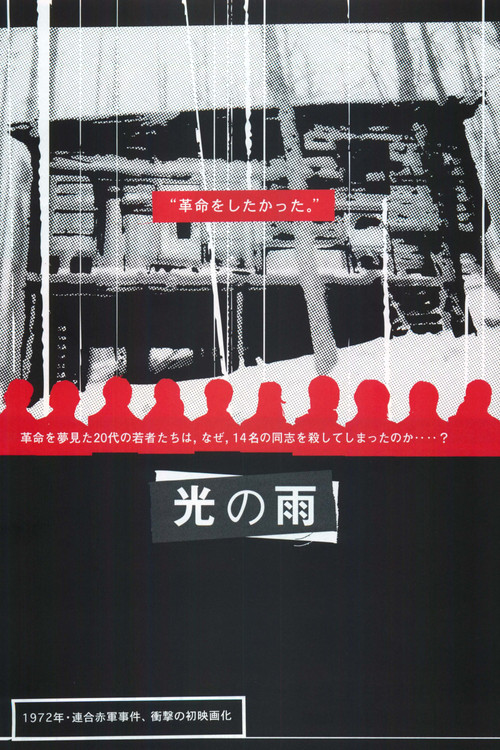
Rain of Light is a specialized historical drama that emphasizes systemic critique over broad demographic representation. It reconstructs the 1972 Asama Sanso Incident, focusing on the collapse of a revolutionary collective. The film excels in deconstructing traditional social stability and institutional authority. However, it lacks significant representation of LGBTQ+ identities or racial diversity, staying true to the specific ethnic context of the time. Ultimately, the work studies how radicalized identity and ideological purity can lead to social and personal fragmentation.
Category Breakdown
The film focuses on political and ideological motivations without showing any LGBTQ+ character arcs or diverse gender identities.
The story centers on a militant group where traditional gender roles are often overshadowed by revolutionary demands. It does not focus on challenging gender roles as a main theme.
The cast is ethnically uniform, reflecting the historical context of the Japanese student movement. It does not include a diverse range of ethnicities.
The film provides a deep critique of established social orders and institutional authority. It explores the failure of extreme anti-state ideologies through a detailed look at radical philosophy.
There is no depiction of physical or neurodivergent disabilities in this historical reconstruction.
Present on Screen
Limited or Absent
Official Synopsis
This documentary-style film recreates the infamous Asama Sanso Incident of 1972 wherein an extreme faction of the Students Allied Red Army holed themselves up in a mountainous cabin in the dead of winter. By the time the police finally caught up with them, it was discovered that they had murderously turned upon themselves in a bizarre extension of their radical philosophy. This event virtually marked the end of the Student Revolution.
1973
1989
1973
1971

1971

2013
2007
1974
No reviews yet. Be the first to share your thoughts on this movie!
Use the rating form above to leave a star rating and optional review.