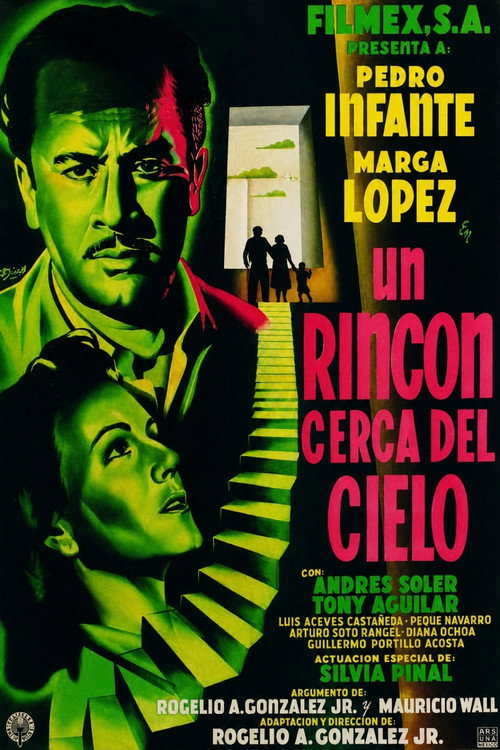
A Place Close to Heaven
1952
No user ratings available yet
Representation score: 2.5 out of 10
Representation Score
Fair
1955
TV-PGDirector
Rogelio A. González
Runtime
100 minutes
Average Rating
No ratings yetNew Showbiz Analysis
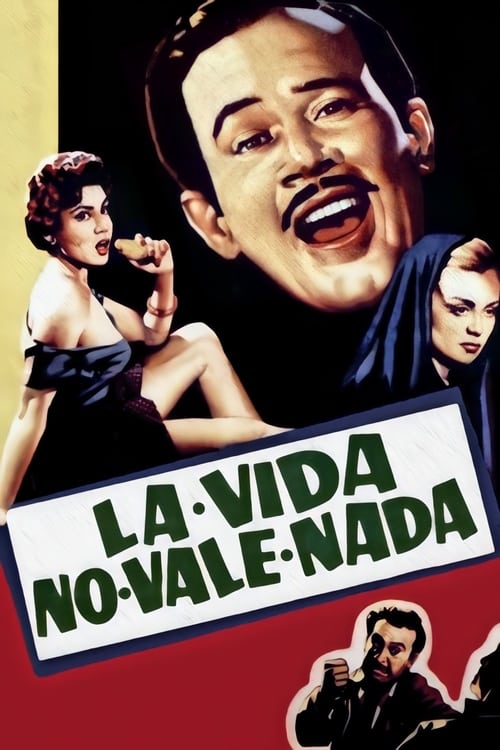
La Vida No Vale Nada is a mid-century social drama that prioritizes individual moral journeys over broader societal critiques. It operates within the established cinematic frameworks of the Golden Age of Mexican cinema, focusing on character psychology and traditional interpersonal dynamics. The film's representation is heavily influenced by its 1955 context. While it offers ethnic authenticity through its Mestizo cast and working-class setting, it adheres to conventional gender roles and lacks queer narratives or diverse disability portrayals. Ultimately, the film is a localized character study. It explores themes of addiction and compassion through a traditional lens, offering little disruption to the social or religious hierarchies of the era.
Category Breakdown
The film does not include any characters with non-straight identities. It centers on a heterosexual relationship between a male laborer and a female widow.
Cruz serves as a nurturing figure providing emotional support to the male lead. Although she has a strong moral compass, her role follows the traditional cliché of the woman tasked with redeeming the male protagonist.
The film features a predominantly Mestizo cast, highlighting Mexican identity and social realities. It emphasizes ethnic authenticity by focusing on the working class and localized social structures.
The story functions as a character study on moral frailty and the human condition. It adheres to a traditional framework where alcoholism is treated as a personal or spiritual issue.
Alcoholism is a central character trait, though it is portrayed more as a moral challenge than a medical condition. There is no depiction of neurodivergence or physical disabilities.
Present on Screen
Limited or Absent
Official Synopsis
Pablo, a wandering laborer, has imprisoned himself in a hell of alcoholism. Cruz, a widow, reaches out to the troubled man, but even her compassion may not be enough to save him.
1952
1961
1970
1967
1951

1945
1959
1955
No reviews yet. Be the first to share your thoughts on this movie!
Use the rating form above to leave a star rating and optional review.