
Jérusalem : porte de Jaffa, côté Est
1897
No user ratings available yet
Representation score: 2.5 out of 10
Representation Score
Limited
1897
Director
Alexandre Promio
Runtime
1 minutes
Average Rating
No ratings yetNew Showbiz Analysis
This 1897 travelogue serves as a historical record rather than a narrative film. Its diversity arises from the accidental inclusion of various ethnic groups in Jerusalem, rather than intentional character development. The film's main strength is its unscripted portrayal of a pluralistic society. By capturing European, Arab, and Jewish residents, it avoids the uniform Western perspective common in films of that era. However, the lack of character-driven action and the absence of social critique limit its progressive impact. It primarily documents existing social hierarchies without challenging them.
Category Breakdown
The film does not show any non-traditional gender expressions or same-sex relationships. It focuses on the shared experience of public transit rather than individual identities.
Women are shown but conform to the gender roles of the late-Ottoman era. The footage respects the social hierarchy of the time without challenging it.
The film captures a multi-ethnic urban environment, showing European travelers, Arab residents, and Jewish residents of the city.
Set against the backdrop of the Ottoman Empire, the film highlights the religious and imperial structures while avoiding a singular Western perspective by focusing on local populations.
There is no depiction of physical or neurodivergent disabilities. The focus remains on the mechanics of the railway and the movement of the crowd.
Present on Screen
Limited or Absent
Official Synopsis
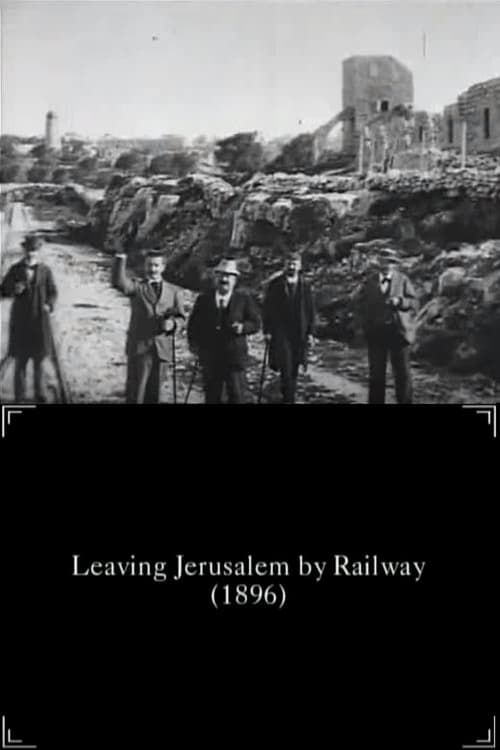
Lasting for roughly 50 seconds, it shows the goodbyes of many passersby - first Europeans, then local Arab residents, then Jewish residents of the city - as a train leaves Jerusalem, then part of the Ottoman Empire.
1897

1897

1896
1897

1896
1897
1897
1896
No reviews yet. Be the first to share your thoughts on this movie!
Use the rating form above to leave a star rating and optional review.