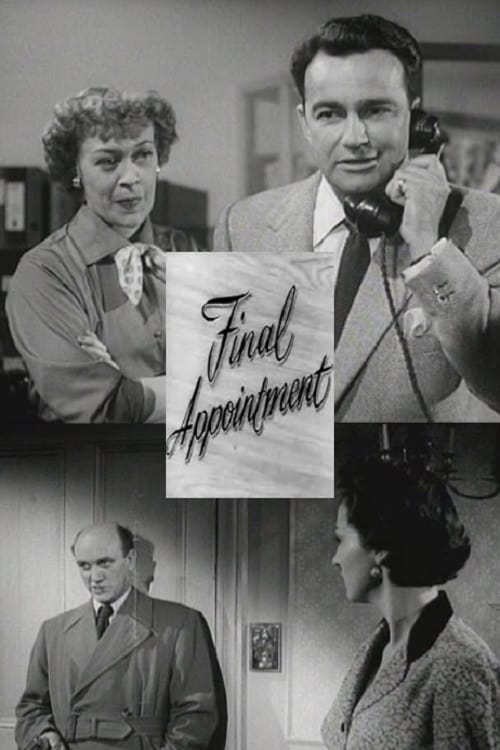
Final Appointment
1954
No user ratings available yet
Diversity score: 2.2 out of 10

1954
NRDirector
Terence Fisher
Runtime
80 minutes
Average Rating
No ratings yetSynopsis
Someone knocked out a man and left him for dead during a fishing trip in Portugal. That someone is either his fetching wife, or two business partners, all sporting guilty faces after his unexpected return. Two more murders and a frame-up befall the quartet before an inspector closes the case.
Overall Score
Limited
Category Breakdown
LGBTQ+ Representation
The film operates within a traditional heteronormative framework. The narrative focuses on a wife and business partners, showing no evidence of non-cisnormative identities.
Gender Representation
While the wife possesses agency as a potential antagonist, she is framed within domestic tropes. The resolution relies on a male inspector to restore patriarchal order.
Racial & Ethnic Diversity
Despite a Portuguese setting, the characters lack ethnic complexity. The film appears to follow the homogeneous casting standards typical of 1950s British cinema.
Religious & Cultural Diversity
The story reinforces traditional legal and social institutions through its investigative structure. It focuses on individual wrongdoing rather than deconstructing Western morality or social hierarchies.
Disability Representation
There is no evidence of characters with physical or neurodivergent disabilities within the narrative.
Strengths
Areas for Improvement
AI Analysis
The Stranger Came Home is a mid-century crime mystery that prioritizes genre conventions over social subversion. The plot follows a standard investigative arc where a victim's return triggers suspicion among a closed circle of associates. The film adheres to the era's status quo, utilizing traditional character archetypes. It focuses on individual culpability and the restoration of order by legal authorities rather than exploring systemic social issues. Ultimately, the work functions as a conventional genre piece. It reinforces established social roles and lacks the intersectional depth required to challenge the period's dominant cultural narratives.
1954

1951

1953

2017
1954
1945

1951

1951

1953

1939
1944
1945
No reviews yet. Be the first to share your thoughts on this movie!
Use the rating form above to leave a star rating and optional review.