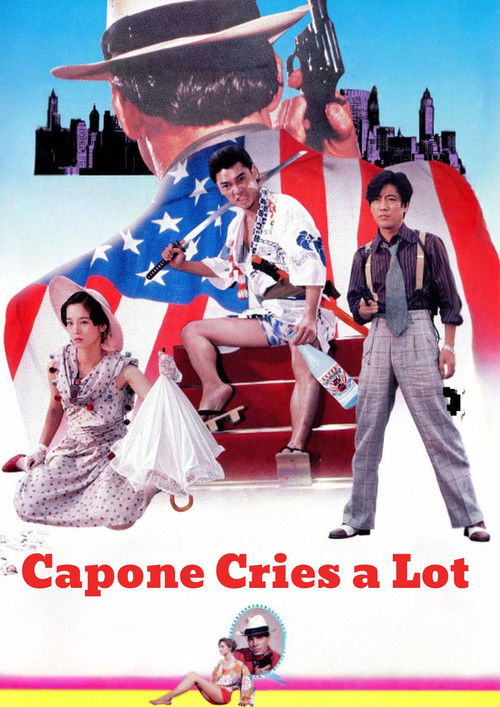
Capone Cries a Lot
1985
No user ratings available yet
Representation score: 5.9 out of 10

Representation Score
Good
2013
Not RatedDirector
Sion Sono
Runtime
130 minutes
Average Rating
No ratings yetNew Showbiz Analysis
Sion Sono’s work thrives on disrupting conventional structures and challenging social taboos. This film succeeds by subverting patriarchal norms through powerful, eccentric female characters who command professional and creative authority. It replaces rigid social hierarchies with a postmodern framework centered on individualistic, disruptive ability to act. However, the film remains culturally narrow. Its focus on a specific Japanese subculture results in low racial and ethnic diversity. Additionally, the lack of explicit LGBTQ+ representation or specific explorations of disability limits its broader inclusivity. Ultimately, the film's strength lies in its cultural critique. It frames anti-social behavior and the rejection of societal norms as forms of creative liberation, making it a transformative study of artistic obsession over institutional conformity.
Category Breakdown
The film does not include explicit stories about LGBTQ+ individuals or show same-sex intimacy. While the setting questions traditional roles, LGBTQ+ identities are not central to the plot.
The story challenges traditional gender roles by featuring strong female characters who are not passive. These women demonstrate intelligence and authority that surpass those of their male counterparts.
The cast is mostly made up of people from a specific Japanese subculture. The film focuses on a local cultural environment rather than a diverse, global community.
The film excels at breaking down social institutions and traditional morality. It shows authority and social order as barriers to be overcome by characters driven by artistic passion.
The film does not focus on visible or invisible disabilities. Characters experience intense psychological states, but these are part of a stylized, operatic reality rather than an exploration of neurodivergence.
Present on Screen
Limited or Absent
Official Synopsis
In Japan, gonzo filmmakers hatch a three-pronged plan to save an actress's career, end a yakuza war and make a hit movie.
1985
1968
2015
1990

2017
2018
1998

2011
No reviews yet. Be the first to share your thoughts on this movie!
Use the rating form above to leave a star rating and optional review.