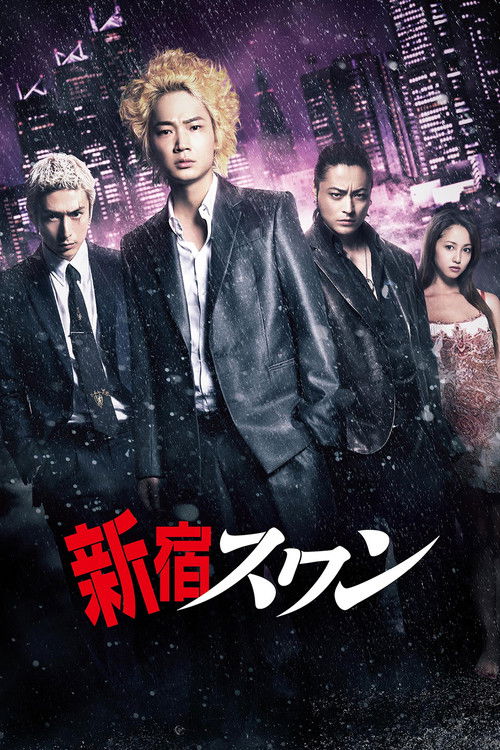
Shinjuku Swan
2015
No user ratings available yet
Representation score: 6.5 out of 10
Representation Score
Good
2017
Director
Sion Sono
Runtime
133 minutes
Average Rating
No ratings yetNew Showbiz Analysis
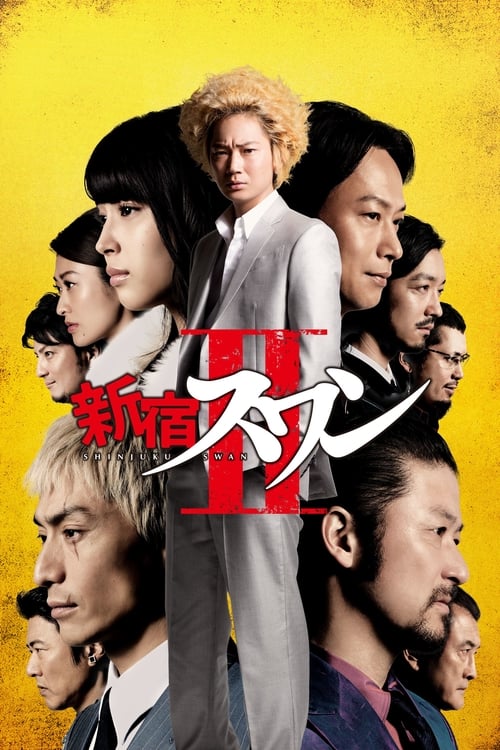
Sion Sono’s Shinjuku Swan II is a gritty, postmodern exploration of systemic exploitation. It prioritizes the experiences of those on the fringes of the traditional social order, using a kinetic and stylized cinematic language. While the film may not excel in traditional demographic categories like LGBTQ+ and racial diversity, it achieves depth through its cultural critique. It effectively dismantles the idea of stable social institutions, presenting a world defined by situational ethics. The film successfully complicates traditional gender roles by highlighting the tension between individuals and a predatory economic system, although it remains limited in its portrayal of disability and diverse identities.
Category Breakdown
The film explores the intimate connections within the nightlife industry but does not prominently feature non-binary or transgender characters or narratives that challenge the assumption that everyone is straight or cisgender.
The story disrupts traditional gender roles by emphasizing the role of women in predatory hostess club environments. Men are often shown as desperate and in debt, rather than as stable figures.
The cast is primarily Japanese, reflecting the local setting of Shinjuku and Yokohama. The film does not significantly explore diverse racial backgrounds beyond this cultural context.
The film provides a sophisticated critique of capitalist systems and the commodification of human relationships. It portrays social institutions as inherently exploitative and morally relative.
There is no significant representation of characters with visible or invisible disabilities having real control over their lives. The narrative focuses on socioeconomic struggles rather than neurodivergence or physical disabilities.
Present on Screen
Limited or Absent
Official Synopsis
Tatsuhiko relocates from Shinjuku to Yokohama, where he comes into conflict with Masaki Taki, CEO of the local scout company.
2015

2013

2022

1973
2016
1973
1972
2017
No reviews yet. Be the first to share your thoughts on this movie!
Use the rating form above to leave a star rating and optional review.