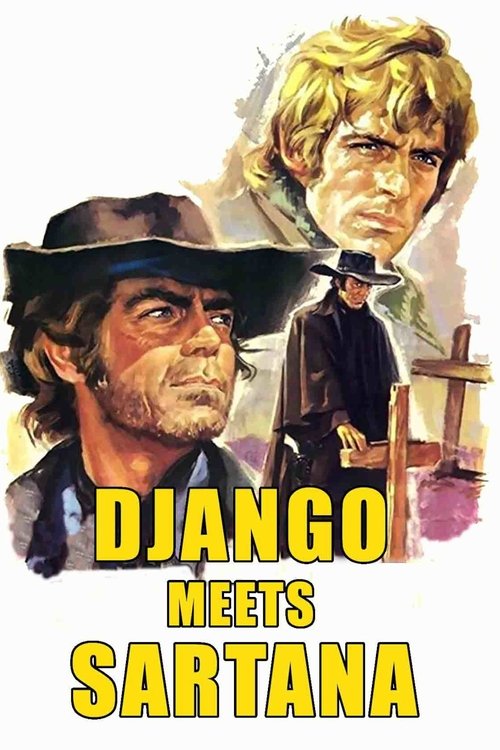
One Damned Day at Dawn... Django Meets Sartana!
1970
No user ratings available yet
Diversity score: 2.1 out of 10
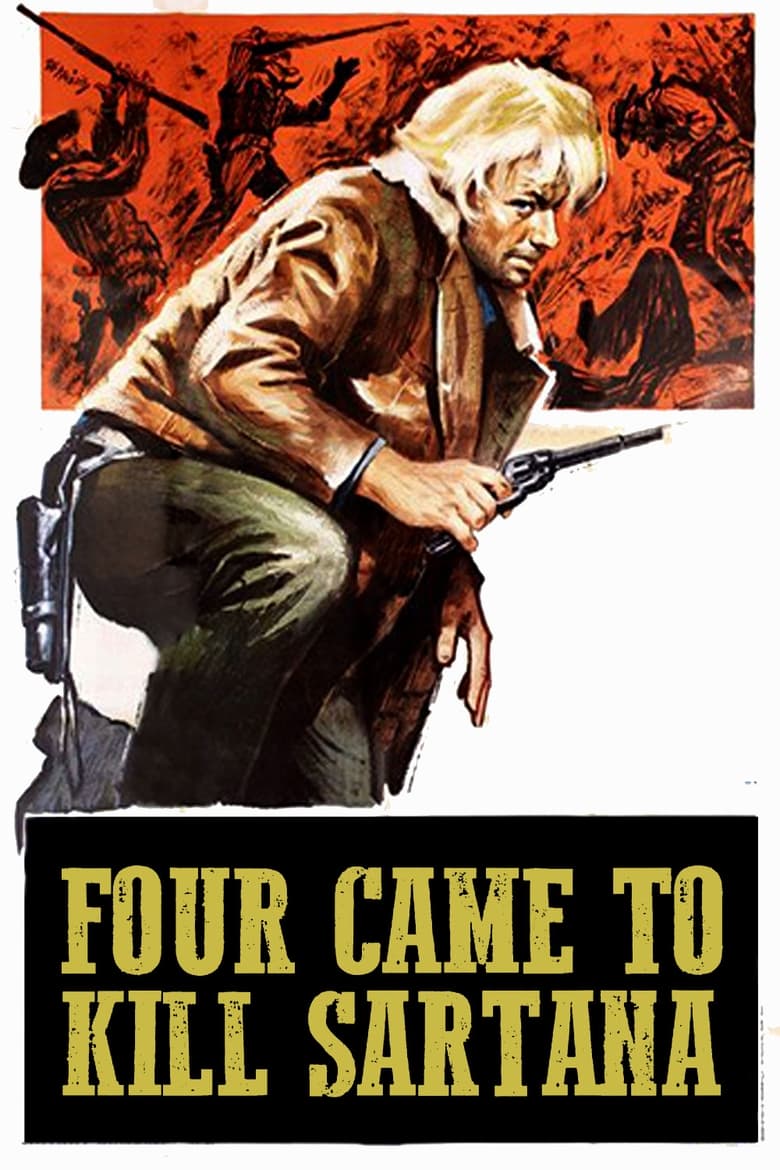
1969
Director
Demofilo Fidani
Runtime
96 minutes
Average Rating
No ratings yetSynopsis
Seven masked bandits, whose chief calls himself "Mormon", kidnap young Susy, cousin of the mayor of Clayton City, Frank Clonny. Frank accepts the $15,000 ransom requested by the bandits and thinks of a plan which will permit him, with the help of Benson, the sheriff, to free his cousin, recover the money and capture the outlaws. The plan, though, is destined to fail, because one of the mayor's men, Donovan, allows the bandits to escape the trap. Benson then decides to call in Sartana, who the Mormon immediately tries to eliminate with the help of four killers: Buffalo, who kills with a bullwhip; Martinez, an expert knife thrower; Sullivan, a giant of incredible strength and Silky, a sly and fast gunslinger.
Overall Score
Limited
Category Breakdown
LGBTQ+ Representation
The film centers on traditional masculine archetypes. There is no evidence of non-cisnormative identities or narratives that critique heteronormativity.
Gender Representation
The plot is driven by male agency through gunfighting and tactical planning. Female characters like Susy serve primarily as catalysts for male action via the damsel trope.
Racial & Ethnic Diversity
The cast is predominantly white, consistent with late 1960s Spaghetti Westerns. The film lacks significant evidence of meaningful racial blending or non-Anglo-Saxon majority casting.
Religious & Cultural Diversity
The film explores moral relativism and the fallibility of Western institutions like the law. It focuses on individual survival and vengeance rather than specific ideological frameworks.
Disability Representation
There is no discernible representation of physical or neurodivergent disabilities. Characters are defined by physical prowess, such as strength and marksmanship, rather than lived disability experiences.
Strengths
Areas for Improvement
AI Analysis
Four Came to Kill Sartana is a quintessential genre piece that prioritizes stylized violence and traditional masculine tropes. The narrative architecture relies on the mechanics of the lone gunslinger and the outlaw band, emphasizing hyper-masculine agency. While the film undermines the infallibility of Western legal institutions, it does so through genre-standard cynicism. The production reflects the demographic and social constraints of 1960s European genre filmmaking. Ultimately, the work lacks meaningful engagement with diverse identities or progressive social frameworks, adhering strictly to the era's cinematic standards.
1970
1970
1971
1970
1970
1968

1968
1970
1968
1969
1972

1948
No reviews yet. Be the first to share your thoughts on this movie!
Use the rating form above to leave a star rating and optional review.