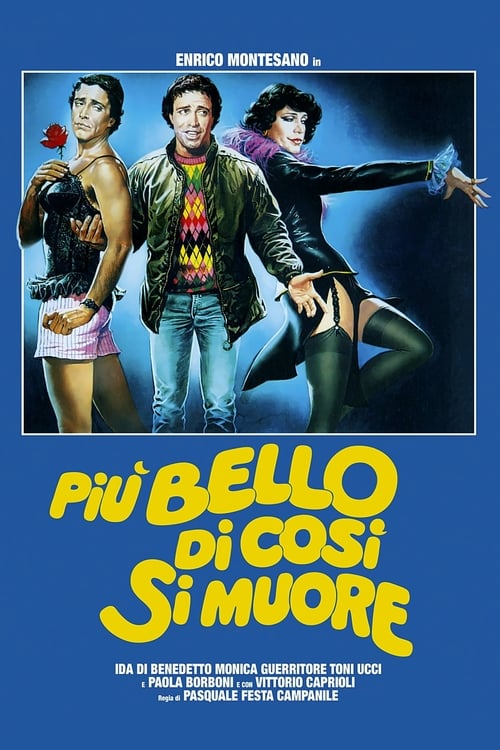
Più bello di così si muore
1982
No user ratings available yet
Representation score: 3.9 out of 10
Representation Score
Fair
1980
Director
Francesco Massaro
Runtime
95 minutes
Average Rating
No ratings yetNew Showbiz Analysis
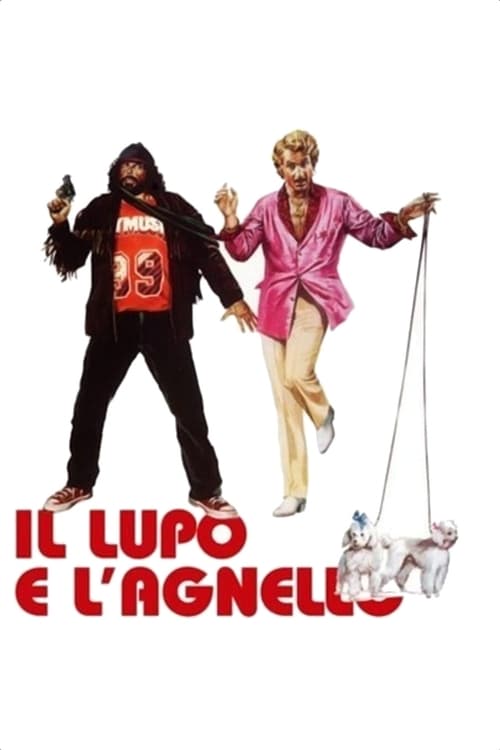
Il lupo e l'agnello stands out for its exploration of the tension between private queer identity and public performance. By making the protagonist's struggle to hide his identity a central plot driver, the film moves beyond simple caricature to explore the social costs of assuming everyone is straight or cisgender. However, the film remains tied to the era's limitations regarding gender and race. Female characters are confined to roles of domestic antagonism, and the setting lacks ethnic variety, focusing instead on class and regional movement. Ultimately, the film's strength lies in its subversion of the traditional family unit. It frames the pursuit of personal satisfaction and the escape from domestic oppression as a form of empowerment.
Category Breakdown
The film focuses on the protagonist's need to hide his homosexuality to maintain his professional standing. This highlights the tension between his private identity and public performance, offering a nuanced look at queer survival.
Gender dynamics are dominated by traditional comedic clichés. Fanny serves mainly as a source of domestic friction and economic pressure, lacking an independent narrative arc.
The story unfolds in a culturally homogeneous European setting of Paris and Rome. There is no significant racial diversity or non-majority casting within the narrative.
The plot challenges traditional family structures by prioritizing individual liberation over domestic sanctity. The protagonist's plan to escape his marriage critiques established social institutions.
There are no visible or invisible disabilities depicted that affect the character arcs or the direction of the story.
Present on Screen
Limited or Absent
Official Synopsis
Leon de Paris is a modest dog-barber in Paris. In search of more satisfaction. Thanks to the economic helps of Fanny (his terrible mother in law), he succeeds to set up in Roma a very stylish "Coiffeur pour homme". But due to this, his life with Fanny isn't funny, and more, Leon has to dissimulate homosexuality for job reasons. He decides to stop this nightmare engaging "Er Cuculo" (the cuckoo) a B-gangster to simulate a robbery. In fact the plan is to take all Fanny's money, share it among them and escape in Montecarlo. Will the strange couple succeed?
1982
1991
1981
1976

2010
1953

1980
1964
No reviews yet. Be the first to share your thoughts on this movie!
Use the rating form above to leave a star rating and optional review.