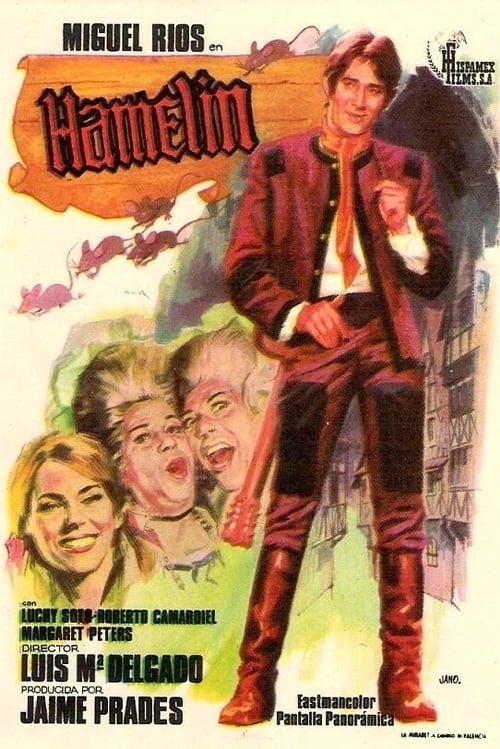
Hamelín
1969
No user ratings available yet
Representation score: 1.8 out of 10

Representation Score
Limited
1968
Director
José Luis Sáenz de Heredia
Runtime
106 minutes
Average Rating
No ratings yetNew Showbiz Analysis
Relaciones casi públicas reflects the traditionalist cinematic standards and social norms of late-1960s Spain. The film adheres to established demographic patterns, offering little disruption to the status quo. It functions within a framework of social stability, prioritizing conventional hierarchies over systemic critique or diverse perspectives. Ultimately, the film provides a narrow view of society that mirrors the era's dominant cultural and religious institutions.
Category Breakdown
The film follows the straight-centered norms typical of 1968. There are no queer narratives or characters with non-traditional gender identities.
The film likely reinforces traditional gender roles. Women do not challenge masculine authority, and the story relies on conventional feminine archetypes.
As a Spanish film from the late sixties, the casting is homogeneous. There is no evidence of diverse ethnic representation.
The film aligns with the social and religious norms of its era. It emphasizes social stability rather than secular or anti-capitalist themes.
There is no evidence of characters with visible or invisible disabilities. The film does not give real power to neurodivergent or physically disabled characters.
Present on Screen
Limited or Absent
1969

1966

1979
1963
1978

1958

1957

1955
No reviews yet. Be the first to share your thoughts on this movie!
Use the rating form above to leave a star rating and optional review.