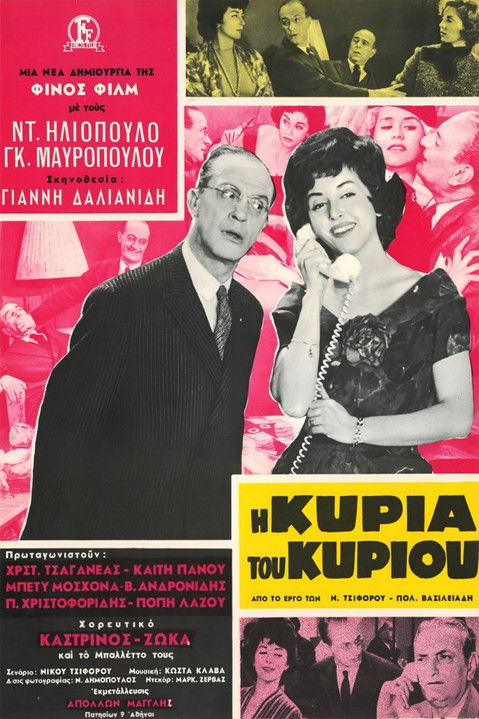
The Miss Of The Mister
1962
No user ratings available yet
Representation score: 3.0 out of 10

Representation Score
Limited
1959
Director
Giannis Dalianidis
Runtime
77 minutes
Average Rating
No ratings yetNew Showbiz Analysis
Laos and Kolonaki is a period-specific social comedy that examines the friction between different social classes in mid-century Athens. The narrative focuses on class mobility and romantic aspirations, particularly through the story of a milkman pursuing an aristocratic woman. While the film addresses social stratification, it does so within the conventional cultural and gendered expectations of 1950s Greek cinema. It serves as a genre-driven piece of popular entertainment rather than a tool for challenging broader societal norms. The film lacks representation of LGBTQ+ identities, racial diversity, or disability, reflecting the homogeneous and traditional societal framework of its time.
Category Breakdown
The film adheres to traditional romantic storylines of its era and does not include characters with non-cisgender identities or same-sex relationships.
The story revolves around a traditional romance between a milkman and an aristocrat, relying on mid-century gender stereotypes.
The production features a predominantly Greek cast with no significant racial or ethnic diversity.
The film delves into social conflicts within a traditional 1950s Greek context, emphasizing social cohesion and conventional family structures.
There is no mention of characters with visible or invisible disabilities in the film.
Present on Screen
Limited or Absent
Official Synopsis
A milkman has his shop at the affluent Athenian neighborhood of Kolonaki and is in love with an aristocratic girl.
1962

1977

1962

1978

1969
1966

1962

1967
No reviews yet. Be the first to share your thoughts on this movie!
Use the rating form above to leave a star rating and optional review.