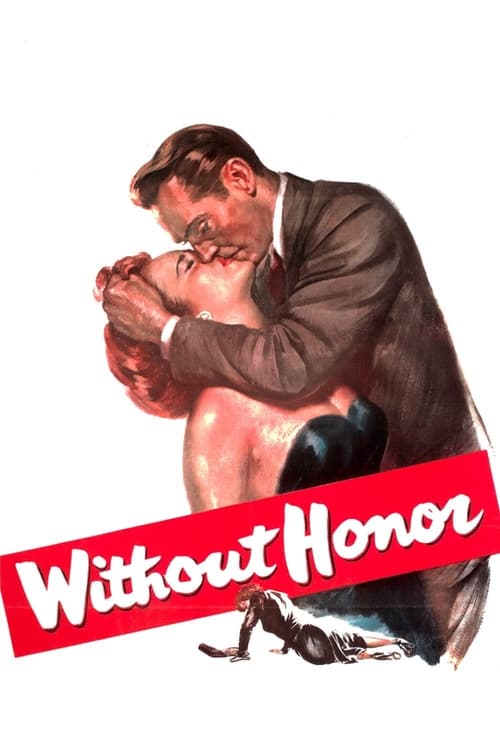
Without Honor
1949
No user ratings available yet
Representation score: 0.4 out of 10
Representation Score
Minimal
1954
NRDirector
Hugo Haas
Runtime
81 minutes
Average Rating
No ratings yetNew Showbiz Analysis
The film is a period-typical psychological melodrama that prioritizes individual moral failings over social or systemic representation. It functions as a study of personal obsession within the established social constraints of the 1950s. While the narrative challenges the 'passive victim' cliché by giving the female lead a calculating role, it remains rooted in traditional romantic and sexual paradigms. The film lacks the complexity needed to disrupt existing social hierarchies. Ultimately, the work reflects the demographic and cultural norms of mid-20th-century Hollywood, offering little in the way of diverse perspectives or social commentary.
Category Breakdown
The film operates within a framework that assumes everyone is straight and cisgender. There is no presence of non-binary or LGBTQ+ identities or same-sex relationships.
Sherry Stewart plays a significant role in driving the story through her blackmail scheme. However, her actions serve to manipulate men rather than challenge patriarchal structures.
The cast is primarily white and homogeneous. The production lacks racial diversity or non-white characters used for narrative depth.
The story focuses on individual morality and interpersonal conflict. It avoids critiques of Western institutions, religion, or systemic capitalism.
No physical or invisible disabilities are portrayed. Character struggles are framed through emotional instability rather than neurodivergence or physical impairment.
Present on Screen
Limited or Absent
Official Synopsis
Bit player Sherry Stewart gets miffed when director Walter Darman turns her down after she reads for a small part in his picture. She and her boy friend, Ronnie, devise a plan to lure Darman to her apartment, where she gives him a drugged drink. She tells Darman they had been intimate and blackmails him for $50,000. More than a little distracted by his situation, his wife senses something is wrong and he gets into a violent argument with his father-in-law who owns the producing company Darman works for, and discontinues the picture. Sherry informs Darman she is going to tell his wife all about them. Darman tells his secretary that he is going to work late and is not to be disturbed, sets the moviola runnings, and exits by the back door and hot-foots it to Sherry's apartment.
1949
1958
1957
1945
1954
1945

1952
1986
No reviews yet. Be the first to share your thoughts on this movie!
Use the rating form above to leave a star rating and optional review.