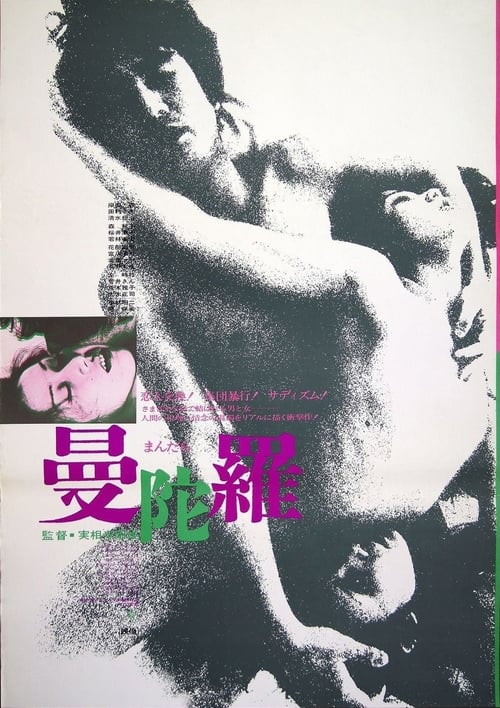
Mandala
1971
No user ratings available yet
Representation score: 6.6 out of 10

Representation Score
Good
1967
Director
Nagisa Ōshima
Runtime
103 minutes
Average Rating
No ratings yetNew Showbiz Analysis
Nagisa Ōshima’s work serves as a sophisticated deconstruction of social taboos. By focusing on the mechanics of desire and the autonomy of underrepresented women, the film challenges traditional cinematic hierarchies and moral frameworks. Though the film lacks modern multi-layered breadth, its structural intent is highly progressive. It replaces conventional morality with a situational ethics based on survival and personal ability to act. The film's strength lies in its systemic critique, using a specific socio-economic niche to challenge the sanctity of mainstream institutions.
Category Breakdown
The film explores sexual freedom and the fluidity of desire within a brothel setting. However, it does not explicitly include LGBTQ+ identities or diverse gender narratives.
The narrative challenges patriarchal structures by centering the experiences of women. Sex workers play a significant role in driving the story and are not portrayed as passive objects.
The cast is made up of a homogeneous Japanese group, reflecting a specific cultural context. It offers a deep look at class and social status within a localized subculture.
The film uses a strong anti-capitalist perspective to critique the commodification of sexuality. It emphasizes moral relativism over traditional or religious morality.
There are no characters with visible or invisible disabilities that drive the narrative.
Present on Screen
Limited or Absent
Official Synopsis
Four sexually hungry high school students preparing for their university entrance exams meet up with an inebriated teacher singing bawdy drinking songs. This encounter sets them on a less than academic path.
1971

1956

1970

1976

1980
1977

1969

1983
No reviews yet. Be the first to share your thoughts on this movie!
Use the rating form above to leave a star rating and optional review.