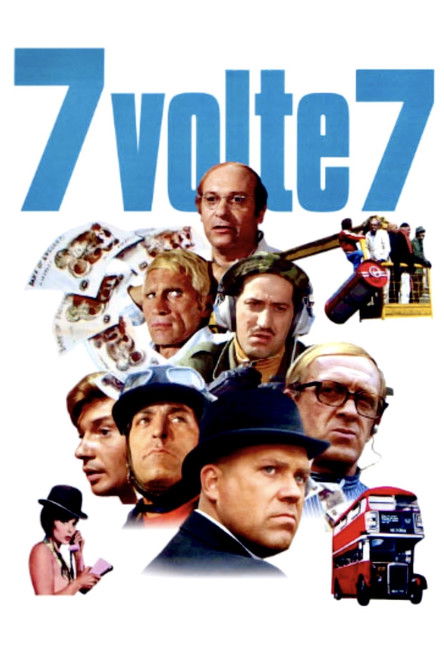
Seven Times Seven
1968
No user ratings available yet
Representation score: 1.4 out of 10
Representation Score
Minimal
1966
Director
Lucio Fulci
Runtime
94 minutes
Average Rating
No ratings yetNew Showbiz Analysis
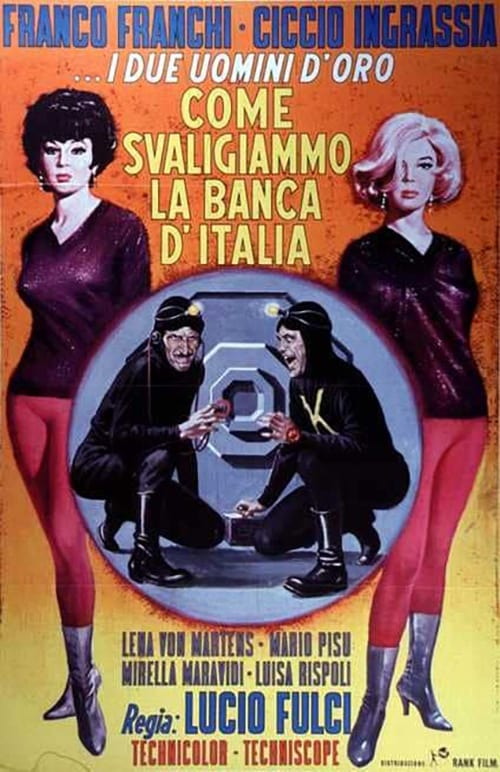
This 1966 crime comedy is a conventional genre exercise that adheres to the social and demographic norms of its time. The storytelling prioritizes comedic heist clichés over any progressive representation or critical social commentary. Operating within a traditional framework, the film focuses on a male-centric duo and a homogeneous social landscape, without challenging established hierarchies or utilizing diverse storytelling techniques. Ultimately, the production serves as a localized piece of entertainment that reflects the standard demographic expectations of 1960s Italian cinema.
Category Breakdown
The film focuses on a male-driven heist premise and does not include any non-cisgender identities or narratives involving same-sex relationships.
The story revolves around a male ensemble, with women playing minor roles and having little influence over the plot.
The cast is predominantly white, with no effort to blend different races or have a non-white majority.
The film follows typical heist comedy clichés without offering any critical examination of societal structures or secular themes.
No visible or invisible disabilities are shown, and characters are defined by their comedic incompetence rather than any neurodivergence or physical conditions.
Present on Screen
Limited or Absent
Official Synopsis
Dim-wits Franco and Cicco try to come up with a plan to rob the safes of the Bank of Italy, but with one muddle after another, they find themselves empty-handed after each attempt to do so.
1968

1972
1977
1969
1994

1958
1977
1969
No reviews yet. Be the first to share your thoughts on this movie!
Use the rating form above to leave a star rating and optional review.