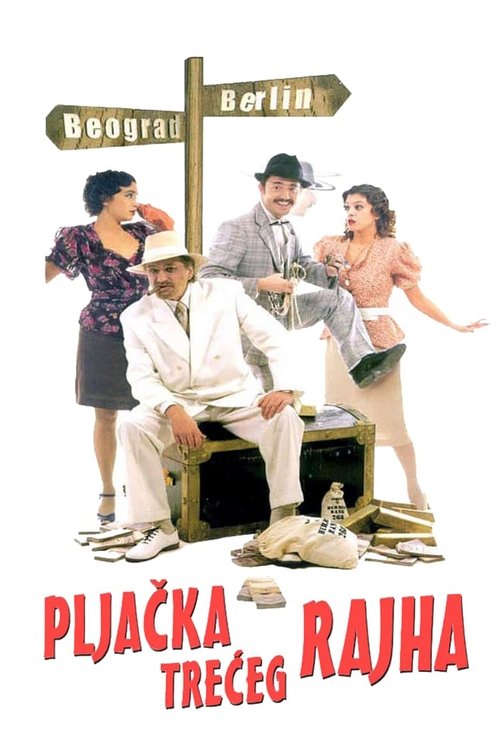
The Robbery of the Third Reich
2004
No user ratings available yet
Representation score: 3.6 out of 10
Representation Score
Limited
1989
Director
Frank Beyer
Runtime
111 minutes
Average Rating
No ratings yetNew Showbiz Analysis
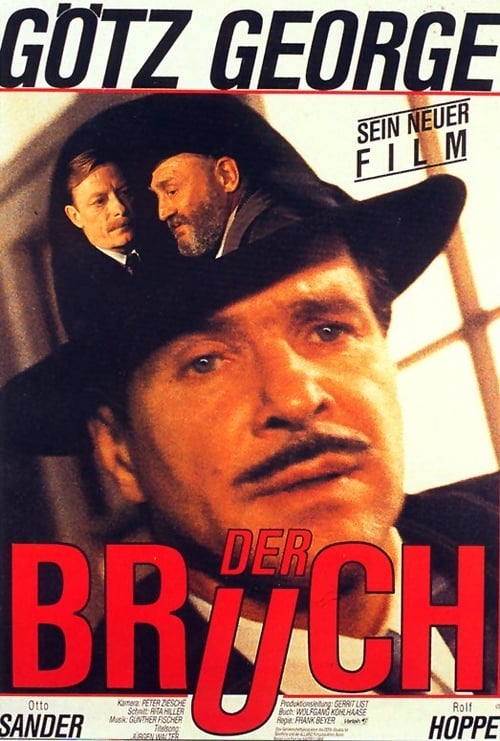
The Break is a crime narrative set in 1946 Germany, focusing on the mechanics of a railway robbery rather than modern identity politics. The film operates within the historical and social norms of its time, emphasizing the heist and the post-war climate over the deconstruction of social hierarchies. Director Frank Beyer was known for navigating complex power dynamics and social critiques, but the film does not show markers of characters who reflect more than one aspect of diversity. Instead, it adheres to the demographic and social norms of its era, without deliberately subverting traditional gender, racial, or sexual orientations.
Category Breakdown
The film does not include any explicit LGBTQ+ characters or narratives. Given the 1946 setting, it focuses on the traditional social structures of the immediate post-war era.
The crime-comedy genre and post-war setting emphasize male-driven roles. There is no indication of challenging traditional gender hierarchies or depicting masculinity in non-traditional ways.
The cast seems to reflect the demographic homogeneity typical of 1946 Germany. There is no evidence of diverse racial casting beyond the historical context of the era.
The film explores systemic instability through a heist of a state institution. It examines the tension between individual ability to act and state authority during post-war reconstruction.
There is no documented evidence of characters with physical or neurodivergent disabilities in the film.
Present on Screen
Limited or Absent
Official Synopsis
A story about massive robbery from the safe of German railways set in 1946.
2004
1969

1958

1972

1999
1981
1968
1986
No reviews yet. Be the first to share your thoughts on this movie!
Use the rating form above to leave a star rating and optional review.