
It Can't Be!
1975
No user ratings available yet
Representation score: 6.8 out of 10
Representation Score
Fair
1963
Director
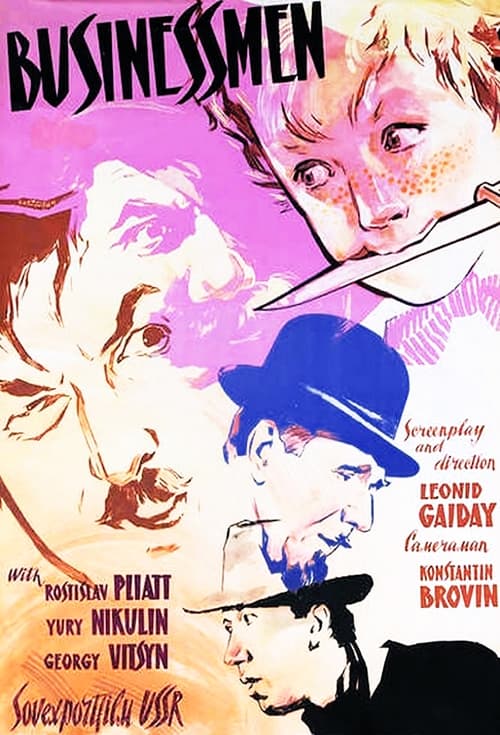
Leonid Gaidai
Runtime
84 minutes
Average Rating
No ratings yetNew Showbiz Analysis
Strictly Business operates as a period-specific satire that emphasizes ideological themes over modern diversity. The film's strength lies in its cohesive critique of capitalist motivations, presenting the pursuit of wealth as a catalyst for social dysfunction. However, the work is constrained by the demographic and social norms of its era. The cast lacks racial, ethnic, and LGBTQ+ diversity, and gender roles remain traditionally defined, with men driving the central plots. Ultimately, the film is a culturally specific product. It succeeds in its thematic goal of challenging the 'heroic entrepreneur' cliché, even if it falls short in providing a broad range of human experiences.
Category Breakdown
There are no characters or identities that represent LGBTQ+ communities. The film focuses on traditional social interactions typical of mid-century Soviet society.
The story adheres to the gender roles common in the 1960s. Women are part of the social fabric, but the main comedic conflicts and schemes are driven almost entirely by male characters.
The cast is fairly uniform, reflecting the demographics of Soviet cinema during that time. There is no indication of intentional diversity in casting or significant ethnic variety.
The film strongly criticizes private enterprise and the accumulation of personal wealth. It portrays the pursuit of profit as a source of comedic chaos and social disorder.
A character's sudden rheumatic attack serves as a brief plot device. This physical condition is used to facilitate a comedic encounter rather than being treated as a central identity.
Present on Screen
Limited or Absent
Official Synopsis
Three stories based on O. Henry novels. (1) Bob Tidball recovers $30,000 in pristine credit cards from a bandit’s sack and races across the plains until his horse breaks its leg. Forced to mount Dodson’s stallion, he’s ambushed and killed by “Shark” Dodson, who seizes the entire loot. (2) A thief slips through a third-floor window to steal a stack of bills from a sleeping gentleman’s dressing table. When the homeowner awakens and raises only one hand against the revolver—his other immobilized by a sudden rheumatic attack—the would-be robber reconsiders his plan. (3) Sam and Bill, two small-time grifters short $2,000 for their swindle, decide to kidnap Ebeneger Dorset’s young son. They demand exactly that sum as ransom, setting in motion a desperate bargain.
1975

1965

1983
1972
1969

1961

1950
1978
No reviews yet. Be the first to share your thoughts on this movie!
Use the rating form above to leave a star rating and optional review.