
Floating Clouds
1955
No user ratings available yet
Representation score: 4.2 out of 10
Representation Score
Limited
1957
Director
Shirō Toyoda
Runtime
133 minutes
Average Rating
No ratings yetNew Showbiz Analysis
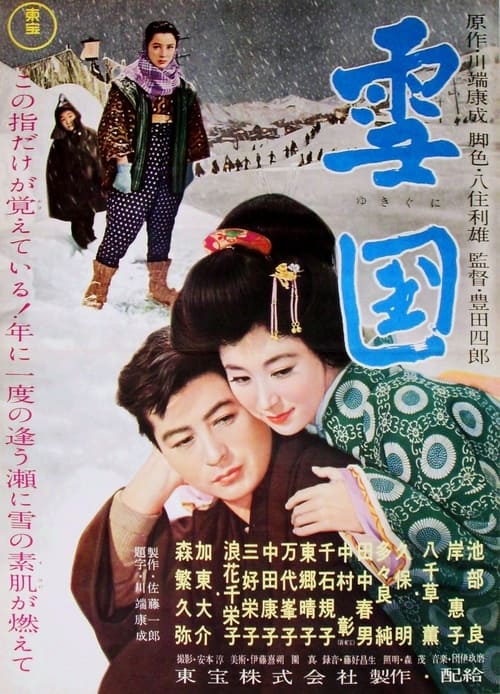
Snow Country is a period-specific drama that prioritizes atmospheric storytelling and classical tragedy over modern multi-layered disruption. The film acts as a cultural time capsule, reflecting the social constraints of 1957 Japan. While Komako offers a nuanced portrayal of a woman navigating restrictive socioeconomic roles, the perspective remains tied to a male protagonist. This creates a power imbalance where the male observer maintains distance while the female characters face the consequences of their devotion. The production is culturally authentic to its setting, though it lacks diversity in terms of identity or social subversion. It portrays established social structures and hierarchies without attempting to deconstruct them.
Category Breakdown
The film does not depict any non-straight relationships or queer undertones. The romantic tension is focused solely on the heterosexual relationship between Shimamura and Komako.
Komako challenges passive stereotypes through her emotional strength and resilience. However, the narrative still leans towards the male perspective and traditional hierarchies.
The film showcases a homogeneous Japanese cast that provides culturally authentic representation. It stays true to its specific geographic and cultural context without whitewashing.
The story emphasizes individual fate and the transient nature of beauty rather than systemic issues. Established social structures like the geisha profession are presented as given realities.
No main characters are defined by physical or neurodivergent disabilities. Tuberculosis serves as a narrative device for tragedy rather than a study of disability.
Present on Screen
Limited or Absent
Official Synopsis
It's a man's world. Shimamura, an artist, comes to this snowbound town to rejuvenate himself. He connects with Komako, a geisha he met on a previous trip, and it seems like love. She's the foster daughter of a local family, almost engaged to the family's son Yukio, now dying of consumption. He's tended by his sister Yuko who's angry at Komako for abandoning her brother. Shimamura returns to Tokyo but promises he will be back soon. In anticipation of his return, Komako breaks with her patron and her family loses their home. Complications arise when Shimamura doesn't come back as promised. Then Komako discovers that he and Yuko knew each other in Tokyo. Can Komako escape destiny?
1955
1951
1969

1952

1964

1939
1951
1981
No reviews yet. Be the first to share your thoughts on this movie!
Use the rating form above to leave a star rating and optional review.