
Night Is Short, Walk On Girl
2017
No user ratings available yet
Representation score: 4.4 out of 10
Representation Score
Excellent
2004
Not RatedDirector
Masaaki Yuasa
Runtime
103 minutes
Average Rating
No ratings yetNew Showbiz Analysis
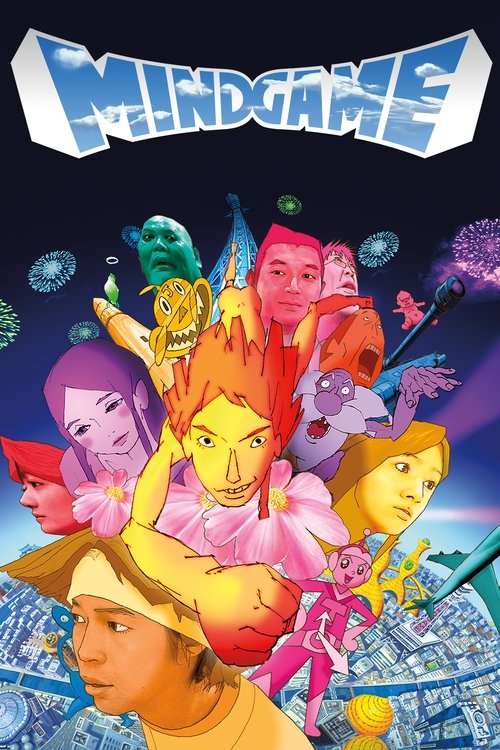
Mind Game is a sophisticated animated film that prioritizes individual ability to act over institutional authority. It deconstructs traditional social and economic hierarchies through a highly expressive, non-conformist visual language. The film's strength lies in its thematic depth, particularly regarding gender equality and cultural critique. By rejecting the monotony of structured existence, it celebrates a subjective, lived experience that transcends standard social frameworks. However, the film lacks explicit demographic markers, focusing instead on abstract representation.
Category Breakdown
The film highlights the relationship between Nishi and Yuki without focusing specifically on LGBTQ+ identities. However, it emphasizes fluidity and rejects rigid social categories, offering a broad perspective on identity.
Nishi and Yuki are portrayed as equal partners rather than following traditional gender roles. Their collaboration challenges the typical protector/protected dynamic through shared control and chaotic interactions with their environment.
As a Japanese production, the film focuses on cultural themes rather than racial diversity. Its surreal animation style emphasizes psychological expression over realistic depictions of race.
The narrative criticizes modern consumerism and prioritizes personal morality over societal norms. It portrays the rejection of institutional standards as essential for individual freedom.
The film does not depict physical or neurodivergent disabilities explicitly. Instead, it explores internal psychological states and an unstable reality that reflects non-traditional cognitive experiences.
Present on Screen
Limited or Absent
Official Synopsis
Nishi is a loser who has a crush on his childhood girlfriend. After an encounter with the Japanese mafia, he journeys to heaven and back, and ends up trapped in an even more unlikely place.
2017

2019
2013
2018
2019
2020

2006

2009
No reviews yet. Be the first to share your thoughts on this movie!
Use the rating form above to leave a star rating and optional review.