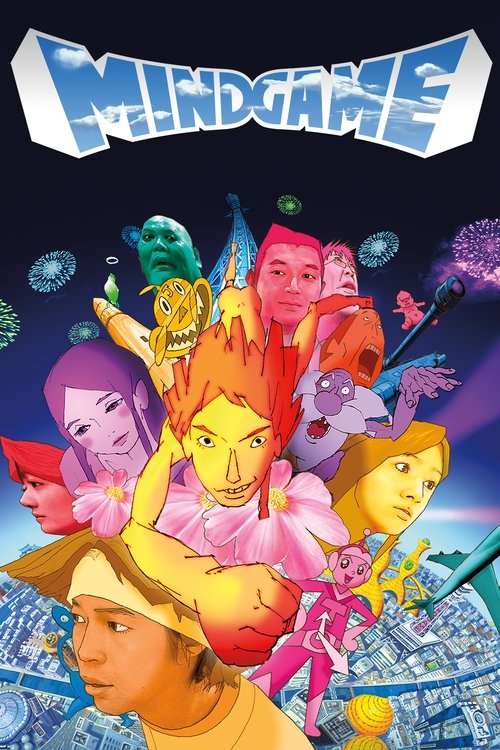
Mind Game
2004
No user ratings available yet
Representation score: 8.5 out of 10

Representation Score
Fair
2019
Not RatedDirector
Masaaki Yuasa
Runtime
95 minutes
Average Rating
No ratings yetNew Showbiz Analysis
Ride Your Wave is a character-driven romance that prioritizes emotional expressionism and stylistic experimentation. It succeeds in centering a female protagonist's journey through grief, moving her beyond a mere supporting role. The use of the Okinawan setting provides a refreshing geographic departure from standard urban Japanese narratives. However, the film remains within the bounds of conventional storytelling. It lacks complexity in reflecting multiple aspects of identity and does not actively challenge established social hierarchies or include diverse identities. The narrative relies heavily on traditional romantic clichés and assumptions that everyone is straight or cisgender. Ultimately, while the film offers a unique visual and emotional experience, it avoids broader social critiques in favor of a more localized, personal focus on loss and connection.
Category Breakdown
The story focuses entirely on a romance between Hinako and Minato, which follows traditional heterosexual norms. It lacks characters with non-binary genders or those who challenge traditional courtship patterns.
Hinako serves as an active protagonist, taking a leading role in the story. While Minato embodies traditional masculine heroism, the plot centers on Hinako's role and emotional resilience.
The setting in Okinawa provides a localized cultural backdrop away from typical Tokyo-centric stories. However, the cast remains ethnically homogeneous without exploring racial blending.
The film utilizes magical realism and secular spirituality rather than organized religion. It prioritizes individual emotional healing over institutional or political frameworks.
Grief is depicted as a psychological struggle that impacts Hinako's ability to function. However, this is framed through romanticized supernatural elements rather than grounded realism.
Present on Screen
Limited or Absent
Official Synopsis
Hinako is a surf-loving college student who has just moved to a small seaside town. When a sudden fire breaks out at her apartment building, she is rescued by Minato, a handsome firefighter, and the two soon fall in love.
2004

2017

2017
2013
2019
2020

2018
2014
No reviews yet. Be the first to share your thoughts on this movie!
Use the rating form above to leave a star rating and optional review.