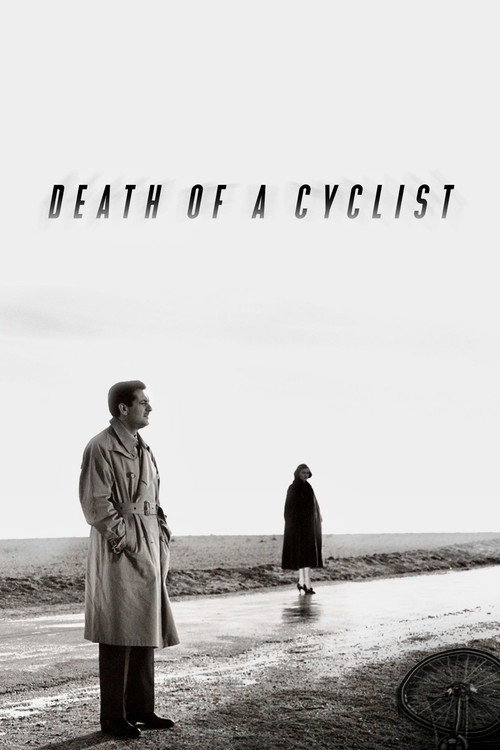
Death of a Cyclist
1955
No user ratings available yet
Representation score: 5.9 out of 10
Representation Score
Fair
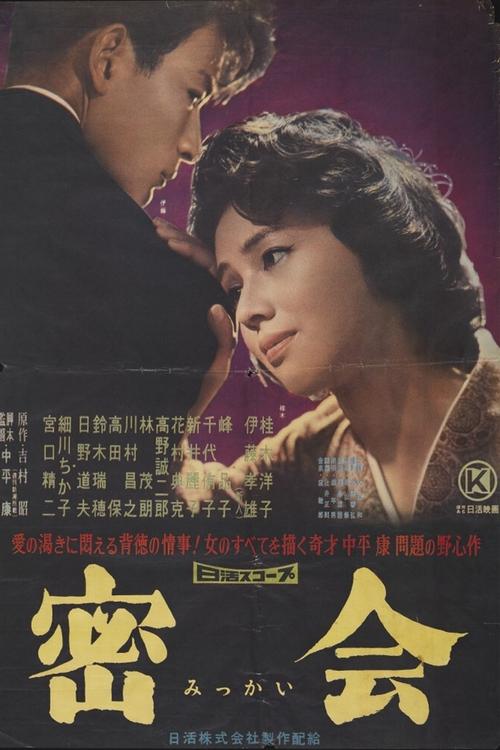
1959
Director
Kō Nakahira
Runtime
72 minutes
Average Rating
No ratings yetNew Showbiz Analysis
Kō Nakahira’s film uses the energy of the Japanese New Wave to critique social rigidities. By focusing on a woman's ability to act and her navigation of an extramarital affair, the film challenges the cliché of the submissive, domestic female protagonist. The film prioritizes subjective morality over communal dictates, reflecting the tension between individual desire and the strict social structures of post-war Japan. While it lacks explicit LGBTQ+ arcs or racial the way different parts of someone's identity overlap, its focus on non-conformity and the disruption of traditional courtship provides a progressive social critique.
Category Breakdown
The film explores secret encounters and social transgressions, challenging strict domestic expectations without explicitly featuring LGBTQ+ identities.
The narrative centers on a woman's ability to act and desire, highlighting her active role in navigating romantic impulses and autonomy within a restrictive post-war urban environment.
The film showcases a culturally homogeneous Japanese cast, providing an authentic cultural document of Japanese identity without whitewashing.
The story critiques the sanctity of the traditional family unit and rigid moralism, emphasizing a shift towards secular, individualistic values.
There are no characters with visible or invisible disabilities serving as central figures or plot devices.
Present on Screen
Limited or Absent
Official Synopsis
After witnessing a murder, a married woman and a student agree not to meet and see each other out of fear of exposing their affair.
1955
1943
1966

1946
1966

1985

1964
1958
No reviews yet. Be the first to share your thoughts on this movie!
Use the rating form above to leave a star rating and optional review.