
Journal of a Crime
1934
No user ratings available yet
Diversity score: 2.8 out of 10
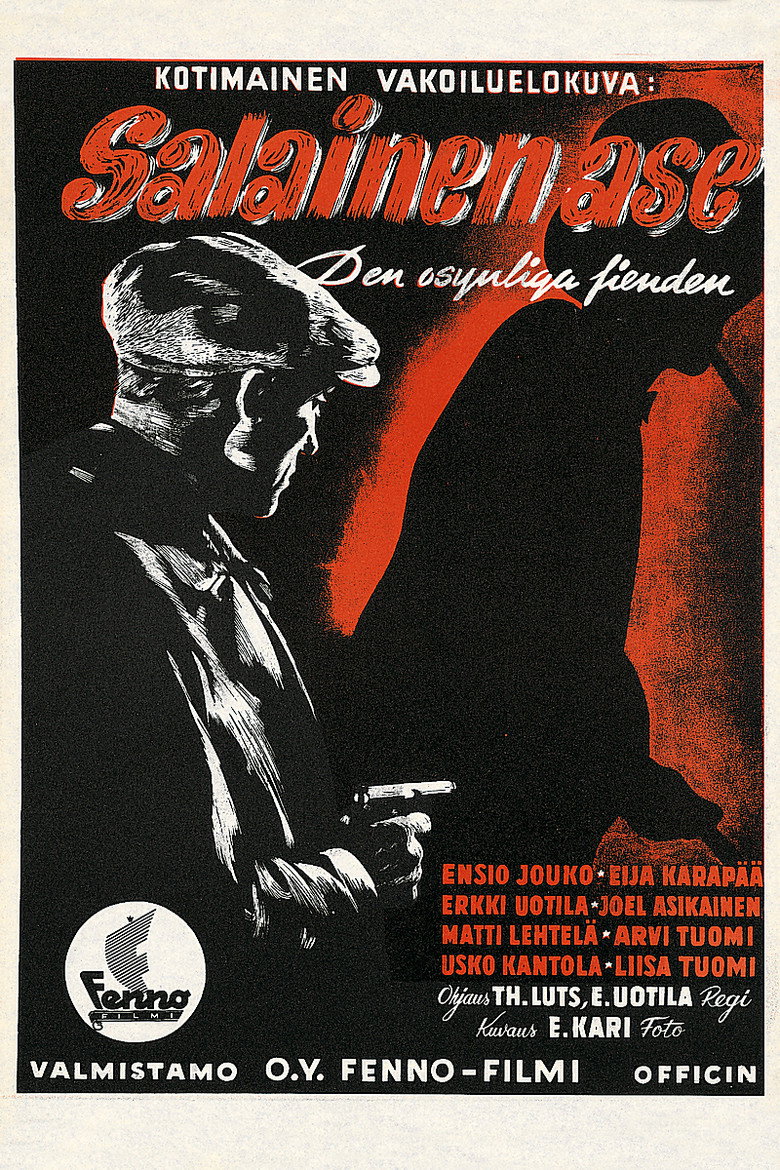
1943
Director
Theodor Luts, Erkki Uotila
Runtime
102 minutes
Average Rating
No ratings yetSynopsis
Tanja Bulkova arrives in Finland under the name Toini Salonen and, with the help of spy chief Rosenberg, becomes the secretary of engineer Rautavuori and discovers the drawings of a secret invention.
Overall Score
Limited
Category Breakdown
LGBTQ+ Representation
The film focuses on espionage and industrial secrets. There are no depictions of same-sex intimacy or non-cisnormative gender identities.
Gender Representation
Tanja Bulkova displays tactical intelligence by using a pseudonym to infiltrate a professional setting. However, her role as a secretary reflects the traditional gendered labor hierarchies of the 1940s.
Racial & Ethnic Diversity
The production reflects the demographic homogeneity of 1943 Finland. The setting and cast appear to focus on localized national interests without multi-ethnic representation.
Religious & Cultural Diversity
The narrative prioritizes national security and the protection of intellectual property. It reinforces traditional structures of state interest rather than deconstructing institutional norms.
Disability Representation
There is no documented evidence regarding the inclusion of characters with physical or neurodivergent disabilities.
Strengths
Areas for Improvement
AI Analysis
Salainen ase is a mid-century crime thriller that functions as a standard genre piece of its era. The narrative is driven by espionage and technological secrets, which keeps the focus on national security rather than social exploration. The film adheres to the heteronormative and demographic norms of 1940s European cinema. It lacks intentionality regarding intersectional identities or the subversion of established social hierarchies. While the female lead shows individual agency through her undercover work, the film remains rooted in the traditional professional and ethnic structures of the period.
1934
1953

1953
1964
1940

2003
1962
1964
1943

1984

2013

1946
No reviews yet. Be the first to share your thoughts on this movie!
Use the rating form above to leave a star rating and optional review.