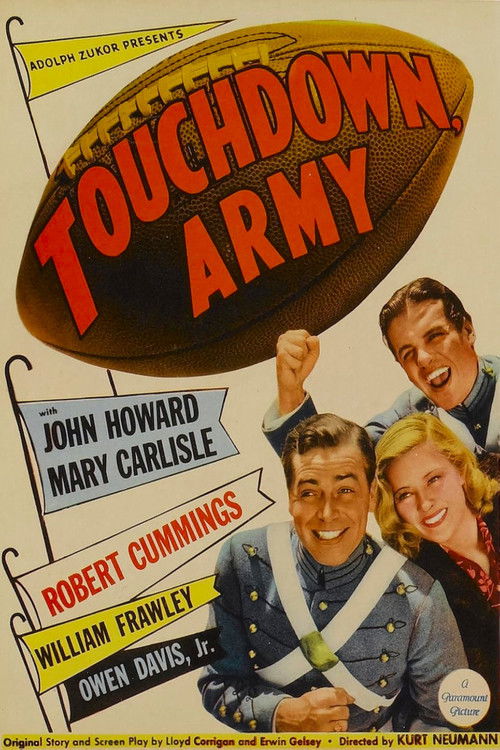
Touchdown, Army
1938
No user ratings available yet
Representation score: 1.2 out of 10
Representation Score
Limited
1950
ApprovedDirector
D. Ross Lederman
Runtime
64 minutes
Average Rating
No ratings yetNew Showbiz Analysis
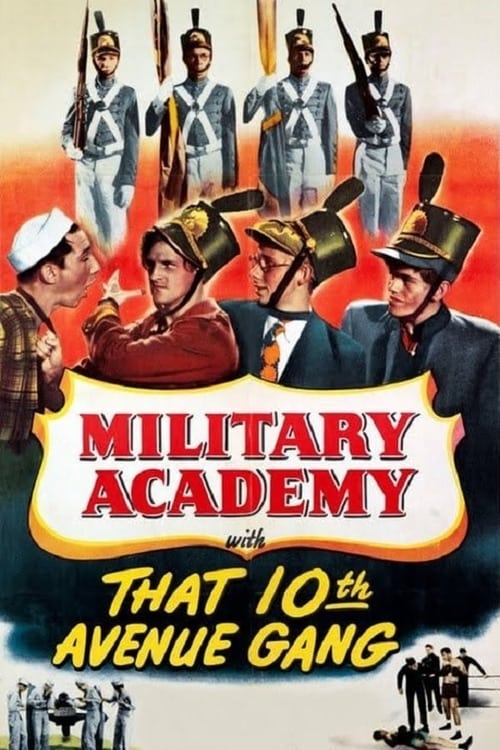
This 1950 comedy-drama is a classic product of its time, emphasizing social conformity and institutional authority. The story is designed to reinforce existing hierarchies, focusing on masculine discipline and restoring order. The film offers minimal demographic complexity, relying on traditional storytelling centered on a homogeneous cast. It avoids challenging social norms, presenting military discipline as the solution to urban delinquency. Ultimately, the work adheres to the conventional narratives of the studio era, avoiding subversion of social norms.
Category Breakdown
The film does not include any LGBTQ+ characters or non-cisgender identities. The story follows mid-century standards that assume everyone is straight.
The story revolves around a traditional masculine hierarchy where women play minor roles and have limited complexity. They are mostly peripheral to the main plot about institutional change.
The cast reflects the homogenous demographics typical of 1950s B-movies. The story focuses on socioeconomic class without addressing racial or ethnic diversity.
The film upholds Western institutions such as military academies as essential for social stability. It emphasizes mid-century values of patriotism and respect for authority.
There are no characters with disabilities shown who play a significant role in driving the story. Behavioral issues serve as the primary conflict rather than neurodivergence or mental health conditions.
Present on Screen
Limited or Absent
Official Synopsis
Military Academy with That Tenth Avenue Gang is a 1950 American comedy-drama film directed by D. Ross Lederman, and starring Stanley Clements, Danny Welton, and Gene Collins
1938

1974
1958

1949
1945
1941
1947
1939
No reviews yet. Be the first to share your thoughts on this movie!
Use the rating form above to leave a star rating and optional review.