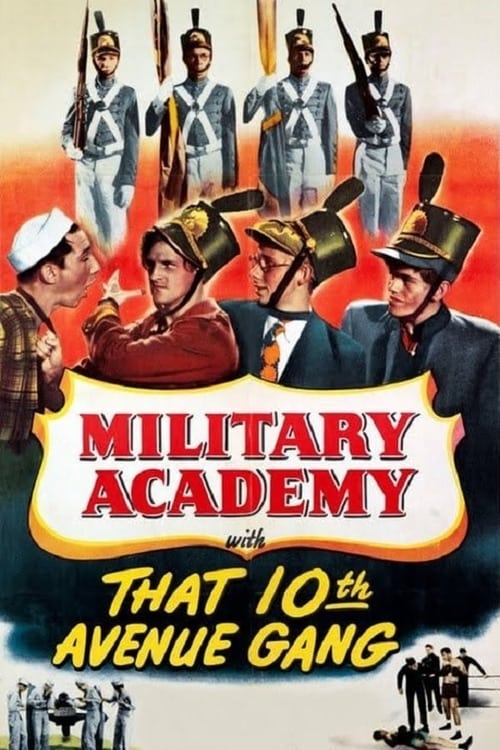
Military Academy with That Tenth Avenue Gang
1950
No user ratings available yet
Representation score: 2.0 out of 10
Representation Score
Minimal
1938
ApprovedDirector
Kurt Neumann
Runtime
70 minutes
Average Rating
No ratings yetNew Showbiz Analysis
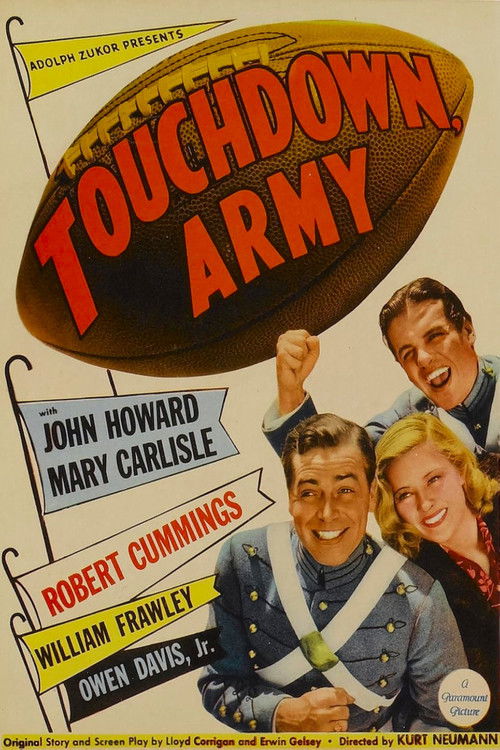
Touchdown, Army is a product of its time, reinforcing the social norms of the 1930s. The narrative centers on the hyper-masculine traditions of West Point and collegiate sports, offering limited complexity in terms of social diversity. The film emphasizes institutional conformity and traditional masculine ideals. By focusing on a male protagonist in a structured military environment, it avoids any disruption of established social norms or power dynamics. Ultimately, the film serves as a typical genre piece reflecting the demographic and social uniformity of 1930s American cinema.
Category Breakdown
The film does not include any characters with non-binary or LGBTQ+ identities. It adheres to the heterosexual and cisgender norms of the time period.
The story focuses on a male protagonist in a highly masculine environment at West Point. It emphasizes traditional masculine traits and leadership without challenging gender roles.
The narrative likely reflects the predominantly white demographics of late 1930s American cinema. There is no indication of significant racial diversity in the West Point setting.
The film portrays a strong sense of patriotism and loyalty to traditional Western institutions like the military. It does not present any secular or anti-Western viewpoints.
There is no depiction of characters dealing with physical or neurological differences. The focus remains solely on athletic and military performance.
Present on Screen
Limited or Absent
Official Synopsis
Prep football star Jimmy Howal gets a reception far different from what he expected when he enters West Point.
1950
1927
1958

1988
1934
2008
1949
1947
No reviews yet. Be the first to share your thoughts on this movie!
Use the rating form above to leave a star rating and optional review.