
Paprika
1932
No user ratings available yet
Representation score: 1.0 out of 10
Representation Score
Limited
1938
Director
Mieczysław Krawicz
Runtime
82 minutes
Average Rating
No ratings yetNew Showbiz Analysis
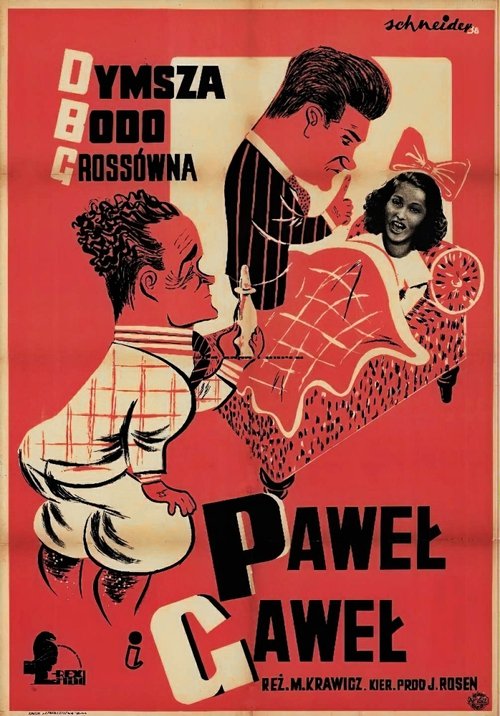
Paweł & Gaweł is shaped by its historical context, adhering to the commercial and social norms of late 1930s Polish cinema. The film relies on conventional romantic structures and traditional social hierarchies rather than more progressive narrative approaches. While Violetta exhibits some ability to act through her musical talent and social manipulation, the story remains rooted in traditional courtship dynamics. The film lacks the complexity of multiple intersecting identities and focuses on lighthearted interpersonal comedy and the restoration of social order. Overall, the film reflects the demographic and cultural homogeneity of its time, providing a traditional viewing experience without challenging systemic norms.
Category Breakdown
The film centers on a traditional romance between a male protagonist and a female violinist. It does not include any characters with non-binary gender identities or narratives that question the assumption that everyone is straight.
Violetta uses her musical talent and social manipulation to influence the story. However, the plot concludes with a traditional romantic resolution, emphasizing conventional gender roles.
The film reflects the demographic uniformity of 1938 Poland. There is no indication of multi-ethnic casting or the use of non-human symbols to represent diversity.
The narrative emphasizes traditional social cohesion and romantic ideals. It focuses on interpersonal humor and the restoration of social order through marriage, avoiding subversive themes.
There are no characters with visible or invisible disabilities in the film. Therefore, there is no basis for evaluating the representation or ability to act of disabled individuals.
Present on Screen
Limited or Absent
Official Synopsis
Two neighbours with similar names, Paweł and Gaweł, meet a violinist girl Violetta who pretends to be a child. When Paweł learns she's not a child anymore, he falls in love with her. And vice versa.
1932

1957
1937
1938
1937
1942

1955

1952
No reviews yet. Be the first to share your thoughts on this movie!
Use the rating form above to leave a star rating and optional review.