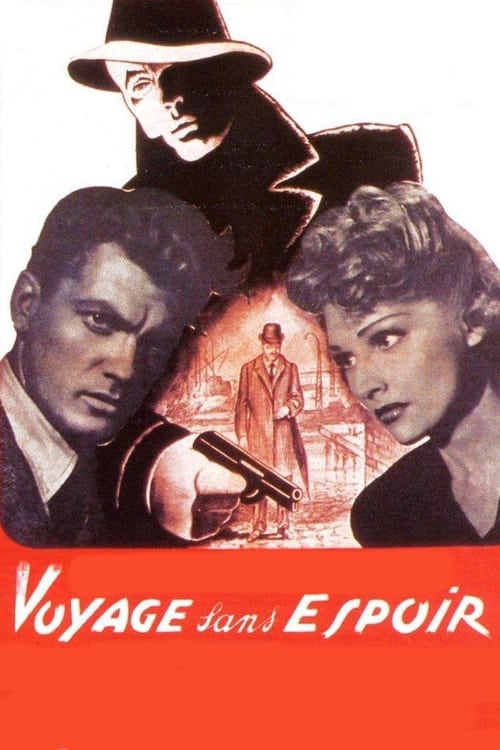
Voyage Without Hope
1943
No user ratings available yet
Diversity score: 3.8 out of 10

1945
ApprovedDirector
Christian-Jaque
Runtime
103 minutes
Average Rating
No ratings yetSynopsis
During the stagecoach trip of a frightened group of inhabitants of Rouen, Elisabeth Rousset, known as "Boule de Suif", renders these people a signal service, but comes up against their stupidity and their sufficiency. A little later, Boule de Suif assassinates the formidable Prussian lieutenant whom his friends had nicknamed Fifi and who shamelessly displayed his taste for pillage and his sadistic tendencies.
Overall Score
Fair
Category Breakdown
LGBTQ+ Representation
The film adheres to mid-1940s social structures, offering no disruption to heteronormative frameworks. There is no evidence of non-cisnormative identities or same-sex intimacy within the character arcs.
Gender Representation
Elisabeth Rousset provides a nuanced portrayal of female agency. She serves as the group's moral fortitude, navigating a crisis that leaves the male characters paralyzed by indecision.
Racial & Ethnic Diversity
The cast is largely homogeneous, reflecting the historical constraints of a Prussian-occupied France. The narrative focuses on class-based frictions rather than ethnic or racial diversity.
Religious & Cultural Diversity
The film excels in its critique of bourgeois morality and Western institutions. It portrays the 'respectable' social class as hypocritical, selfish, and complicit in systemic oppression.
Disability Representation
There is no significant evidence of characters with visible or invisible disabilities. The focus remains strictly on the socio-political and moral conflicts of the group.
Strengths
Areas for Improvement
AI Analysis
Boule de Suif is a sophisticated critique of class-based morality that prioritizes intellectual subversion over demographic variety. While it lacks modern intersectional markers, it effectively deconstructs the hypocrisy of established social hierarchies. The film's strength lies in its ability to use a localized historical setting to expose the fragility of social standing. It successfully frames the 'respectable' members of society as the true antagonists through their greed and complicity. However, the work remains limited by the demographic norms of its era. It offers almost no representation for LGBTQ+ identities, racial diversity, or disability, focusing instead on the specific class tensions of occupied France.
1943

1943
1947
1934

1950
1950
1930

1991
1956

1957
1946
1929
No reviews yet. Be the first to share your thoughts on this movie!
Use the rating form above to leave a star rating and optional review.