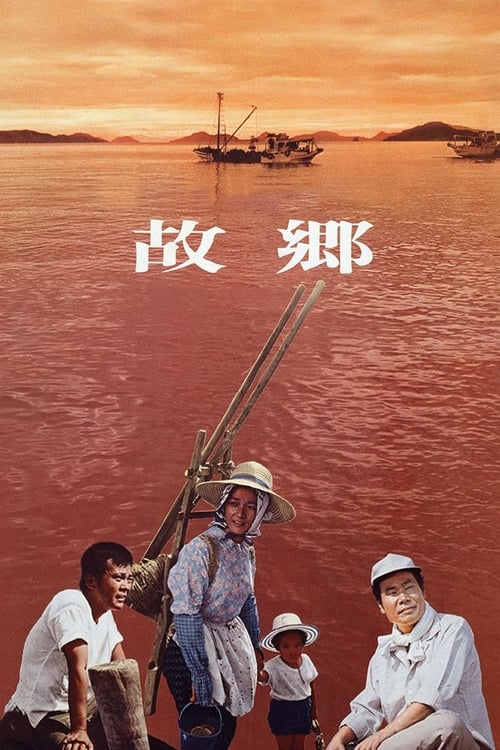
Home from the Sea
1972
No user ratings available yet
Representation score: 3.5 out of 10
Representation Score
Minimal
1970
Director
Yoji Yamada
Runtime
106 minutes
Average Rating
No ratings yetNew Showbiz Analysis
Yoji Yamada’s film is a study in humanistic realism, focusing on a family's transition from industrial mining to agrarian life in Hokkaido. The narrative prioritizes socioeconomic shifts and the resilience of the family unit over identity-driven storytelling. While the film provides a grounded, period-accurate portrait of rural Japan, it lacks diversity in terms of LGBTQ+ representation, disability, and racial variety. It functions as a culturally specific window into 1970s Japan rather than a diverse ensemble piece. Ultimately, the film adheres to the social hierarchies of its era. It documents traditional gender roles and religious influences as functional elements of the setting rather than attempting to challenge or deconstruct them.
Category Breakdown
The film follows a traditional narrative structure without including any LGBTQ+ characters or exploring non-straight relationships.
Gender roles reflect 1970s agrarian realism. Masculinity is defined by physical labor and providing for the family, while femininity centers on household maintenance and community stability.
The cast is homogeneous, reflecting the specific historical and geographic context of rural Japan. It does not include diverse backgrounds or challenge social orders.
Traditional Japanese life is depicted through organic Shinto and Buddhist influences. The film highlights family cohesion as a pillar of survival during economic shifts.
There is no significant representation of characters with visible or invisible disabilities. The narrative emphasizes the physical endurance required for manual labor.
Present on Screen
Limited or Absent
Official Synopsis
The story is set in 1970 during the time of the first EXPO in Japan. The film’s main figure is a miner who suddenly becomes unemployed because the mine he worked in was shut down. He decides to resettle with his whole family to Hokkaido in northern Japan and start a new life as a farmer.
1972
1960
1980
1936
1957
1959

1975
1956
No reviews yet. Be the first to share your thoughts on this movie!
Use the rating form above to leave a star rating and optional review.