
Thieves
1930
No user ratings available yet
Representation score: 1.4 out of 10
Representation Score
Minimal
1930
NRDirector
James Parrott
Runtime
21 minutes
Average Rating
No ratings yetNew Showbiz Analysis
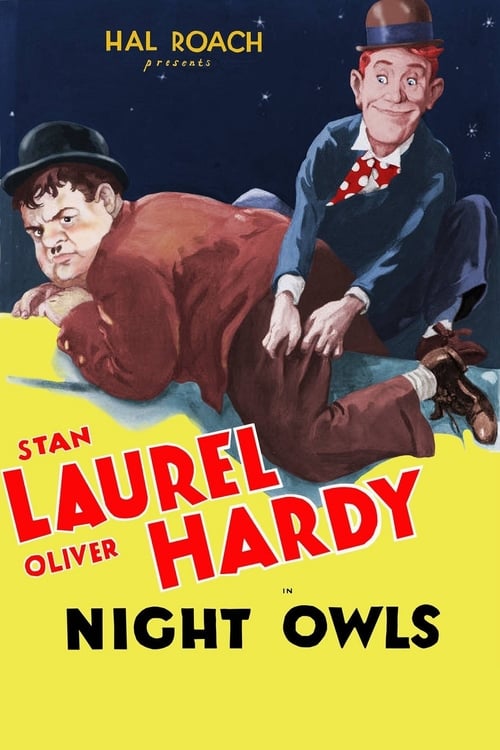
Night Owls is a product of the early 1930s slapstick era, focusing on male-driven conflict and established social hierarchies. The story revolves around professional stakes and schemes involving a policeman and two vagrants, leaving little room for diverse perspectives. The film reinforces traditional gender roles by excluding female characters entirely. Its social commentary is limited to the tension between authority and outcasts, rather than exploring deeper systemic issues or multiple aspects of identity. Ultimately, the film adheres to the conventional narrative structures of its time, prioritizing institutional stability and comedic archetypes over diverse representation.
Category Breakdown
The film does not include any LGBTQ+ characters or narratives, sticking to traditional assumptions about relationships.
The story centers on male characters, such as the policeman and the protagonists, without featuring any significant female roles.
The film depicts a homogeneous working-class community, reflecting the demographic standards of mainstream 1930s Hollywood.
The plot highlights the tension between institutional authority and social outcasts, emphasizing traditional views of law and order.
The film does not feature any characters with visible or invisible disabilities.
Present on Screen
Limited or Absent
Official Synopsis
Policeman Edgar Kennedy is told by his chief he better stop a string of burglaries that have been happening on his watch or else he will get the sack. He persuades vagrants Stan and Ollie to rob the chief's house so he can regain his reputation by catching them. The policeman promises to later get the boys off. Things do not go as planned.
1930

1940
1933
1940
1929
1916

1930

1939
No reviews yet. Be the first to share your thoughts on this movie!
Use the rating form above to leave a star rating and optional review.