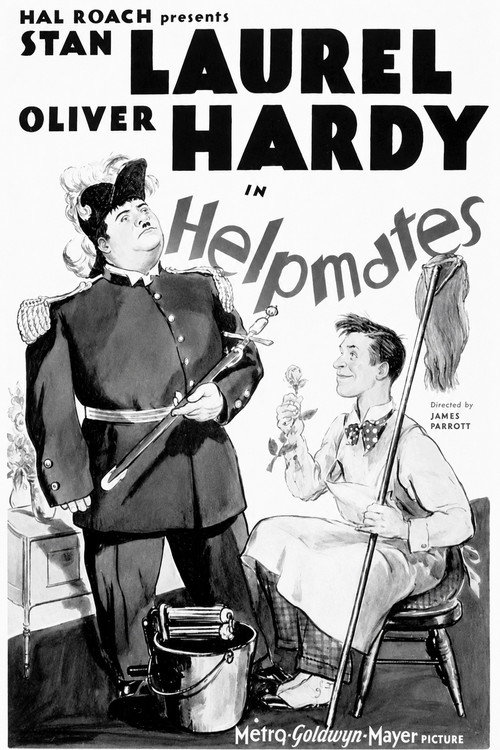
Helpmates
1932
No user ratings available yet
Diversity score: 1.3 out of 10
1931
NRDirector
James Parrott
Runtime
68 minutes
Average Rating
No ratings yetSynopsis
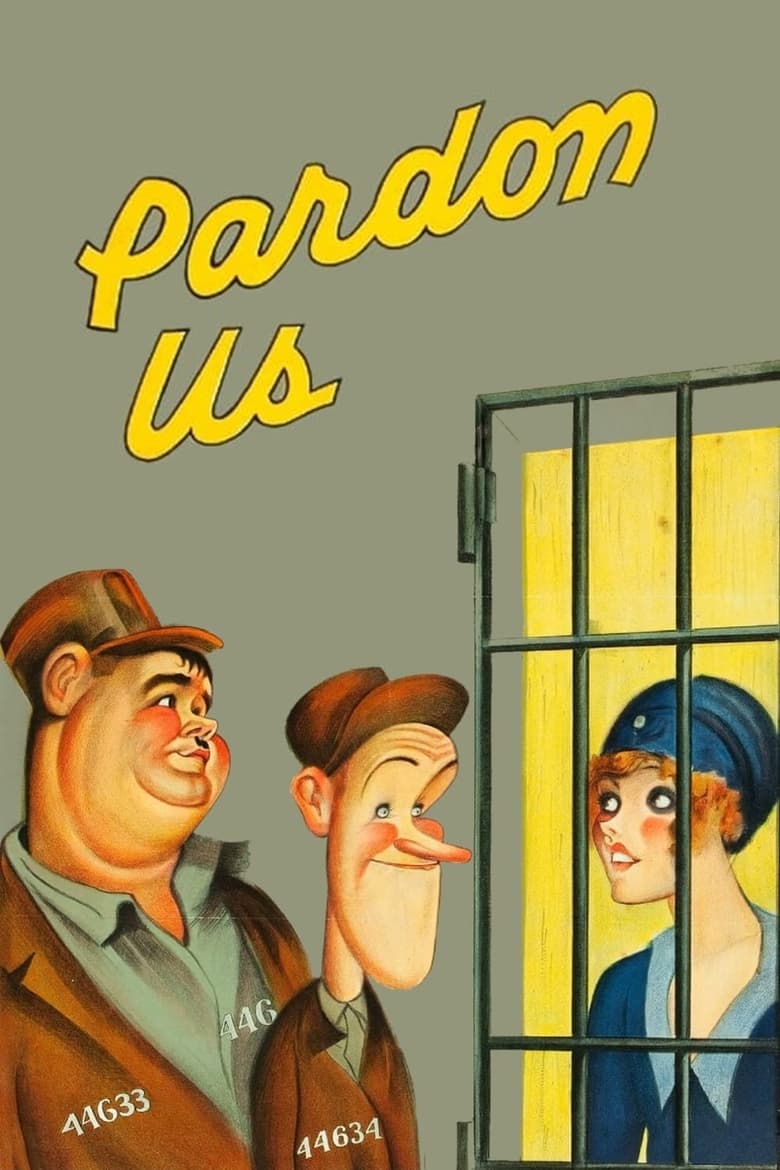
It's Prohibition, and the boys wind up behind bars after Stan sells some of their home-brew beer to a policeman.
Overall Score
Minimal
Category Breakdown
LGBTQ+ Representation
The film contains no depictions of non-heteronormative identities or queer narratives. It presents a social landscape through a conventional lens without engaging with sexual identity.
Gender Representation
The narrative is almost exclusively male-centric, focusing on the camaraderie of the male protagonists. Women are largely absent from the central plot, resulting in a lack of female agency.
Racial & Ethnic Diversity
The cast reflects the homogeneous demographic standards of early 1930s cinema. There is no evidence of color-blind casting or the inclusion of non-Anglo-Saxon perspectives.
Religious & Cultural Diversity
The film explores friction between individual agency and Prohibition laws through a comedic lens. It treats legal and social constraints as slapstick obstacles rather than systemic issues.
Disability Representation
There is no intentional representation of neurodivergence or physical disability. The protagonists' physical clumsiness serves as a tool for slapstick rather than a meaningful exploration of lived experience.
Strengths
Areas for Improvement
AI Analysis
Pardon Us is a product of its historical moment, functioning as a traditional comedic text that reinforces early 20th-century social hierarchies. The narrative architecture focuses on the protagonists' navigation of the Prohibition era through slapstick. Because the film adheres to the demographic norms of the 1930s, it lacks the intentionality required to engage with intersectional identities. The story operates within a culturally monolithic framework that offers little disruption to established social structures. Ultimately, the film prioritizes physical comedy and fraternal dynamics over any meaningful exploration of diverse perspectives or systemic social critiques.
1932
1930
1930
1930

1930
1935

1930
1929
1935
1940
1939
1933
No reviews yet. Be the first to share your thoughts on this movie!
Use the rating form above to leave a star rating and optional review.