Oklahoma!
1999
No user ratings available yet
Representation score: 3.6 out of 10
Representation Score
Minimal
1955
GDirector
Fred Zinnemann
Runtime
148 minutes
Average Rating
No ratings yetNew Showbiz Analysis
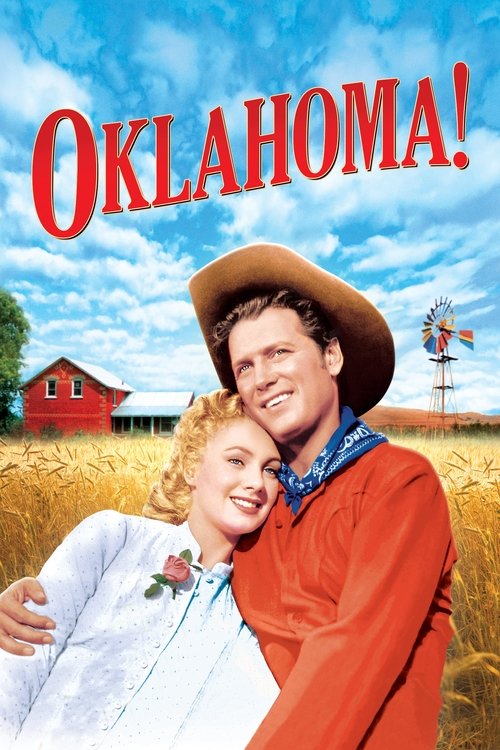
Oklahoma! is a quintessential mid-century musical that prioritizes the consolidation of Western community values. While it excels in storytelling, its structure reinforces the social hierarchies of its era. The film's narrative is built around a singular, settler-colonial perspective. By focusing on the 'taming' of the West, it excludes the diverse populations that existed during this historical period. Ultimately, the film celebrates social cohesion and traditional norms. It aims to establish a sense of patriotic stability without challenging systemic social or racial structures.
Category Breakdown
The film operates within a strict focus on heterosexual relationships. There is no room for queer identities or subtext, and romantic conflicts are driven solely by traditional male-female pairings.
While Laureyl plays a significant role and the film passes the Bechdel test, the roles largely reinforce mid-century gender stereotypes. Men drive the physical action, while women are primarily in domestic or romantic spaces.
The narrative centers on a homogeneous, white, Anglo-Saxon population. It prioritizes a settler-centric perspective that overlooks the presence and ability to act of Indigenous peoples.
The story celebrates Western expansion and community stability. It promotes a moral dichotomy where social integration and burgeoning American settlements are seen as inherently virtuous.
There is no significant depiction of physical or neurodivergent disabilities. Characters are defined by a physical vitality typical of the Western genre.
Present on Screen
Limited or Absent
Official Synopsis
There's a box social coming up, and Curly asks Laurey if she'll be his date. Trouble is, Laurey thinks he's waited too long, and in a fit of pique accepts an offer from the boorish ranch hand Jud instead. Meanwhile, Laurey's friend Ado Annie is also torn between two men: cowboy Will and foreign peddler Ali Hakim. Both women struggle to know their own hearts before it's too late.
1999
1953

1954
1948
1950
1946
1945

1953
No reviews yet. Be the first to share your thoughts on this movie!
Use the rating form above to leave a star rating and optional review.