
A Class Apart: A Mexican American Civil Rights Story
2009
No user ratings available yet
Representation score: 3.9 out of 10
Representation Score
Limited
2025
TV-14Director
Alexis Aggrey
Runtime
55 minutes
Average Rating
No ratings yetNew Showbiz Analysis
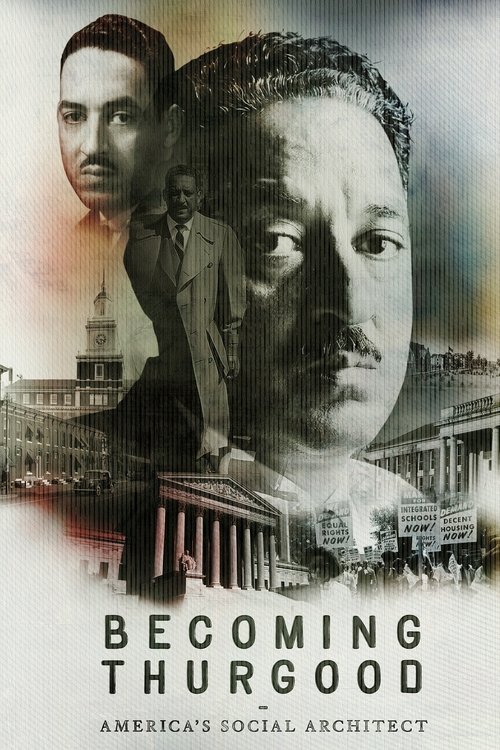
The documentary serves as a powerful study of Black intellectualism and legal ability to act. By tracing Thurgood Marshall's journey from Baltimore to the Supreme Court, it effectively documents the dismantling of systemic racial hierarchies. While the film excels in highlighting racial and cultural critique, its scope appears narrow. The narrative is heavily centered on Marshall's professional life, leaving questions about gender the way different parts of someone's identity overlap and other underrepresented identities unanswered. Overall, the work is a significant piece of historical inquiry that prioritizes the perspective of the underrepresented against the state.
Category Breakdown
The documentary does not provide any specific information about LGBTQ+ identities. There are no explicit character arcs or themes that go beyond assuming everyone is straight or cisgender.
The film focuses primarily on Marshall's professional and legal career. It is unclear whether the narrative explores the roles of women in the civil rights movement, considering various aspects of their identity.
The film centers around a Black protagonist who challenges white supremacy. It highlights the intellectual ability to act of Black scholars through Marshall's education at historically Black colleges and universities (HBCUs).
The narrative critiques the legal and social structures of mid-20th century America. It portrays civil rights as a necessary disruption of traditional Western institutional power.
There is no mention of neurodivergent individuals or characters with physical disabilities. The biographical scope does not address any representation of disabilities.
Present on Screen
Limited or Absent
Official Synopsis
Becoming Thurgood: America’s Social Architect traces Marshall’s life and career from his birth in Baltimore in 1908, through his years at Historically Black Colleges and Universities Lincoln University and Howard University School of Law, and on to his groundbreaking career as a lawyer championing civil rights. After launching his legal career in Baltimore in 1935, Marshall went on to win 29 of the 32 cases he argued before the U.S. Supreme Court , most notably the landmark Brown v. Board of Education case in 1954, which ended racial segregation in public schools. In 1967 he was appointed to the Supreme Court, where he served until his retirement in 1991.
2009
2018
2021

2018
1970

2017
2017
1994
No reviews yet. Be the first to share your thoughts on this movie!
Use the rating form above to leave a star rating and optional review.