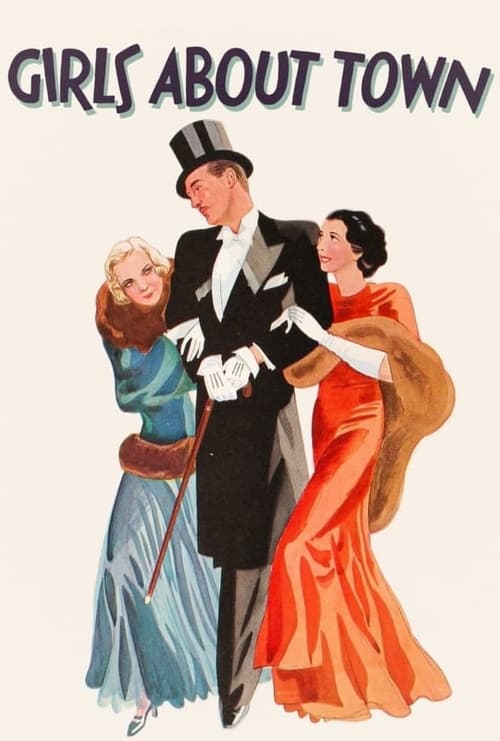
Girls About Town
1931
No user ratings available yet
Diversity score: 3.6 out of 10

1932
Director
Alexander Hall, Harry Wagstaff Gribble
Runtime
72 minutes
Average Rating
No ratings yetSynopsis
International con artist Martha Hicks a.k.a. Countess von Claudwig is released from another stay in prison and decides to treat her rheumatism with a stay at her estranged husband's hotel at a Wisconsin spa. There undercover, she checks in on the two daughters she abandoned as infants.
Overall Score
Limited
Category Breakdown
LGBTQ+ Representation
The film lacks LGBTQ+ characters or narratives that critique heteronormativity. It adheres to the standard social frameworks of the early 1930s.
Gender Representation
Martha Hicks serves as a strong subversion of traditional gender hierarchies. As a resourceful con artist, she drives the plot with significant agency and intellect.
Racial & Ethnic Diversity
The production lacks significant racial or ethnic diversity in its primary cast. The narrative focuses on specific socioeconomic classes without disrupting Anglo-centric norms.
Religious & Cultural Diversity
The story deconstructs social respectability by centering on a racketeer. It explores subjective morality through a protagonist who prioritizes autonomy over traditional familial duties.
Disability Representation
The protagonist mentions having rheumatism, but there is no evidence of disability serving as a central narrative driver. The role of disability remains unquantifiable.
Strengths
Areas for Improvement
AI Analysis
Madame Racketeer stands out for its portrayal of female agency during the pre-Code era. Martha Hicks is a rare example of a protagonist who operates outside traditional domesticity, using her intellect to navigate the world as a con artist. However, the film remains limited by the social standards of its time. It lacks meaningful racial diversity and provides no representation for LGBTQ+ identities, keeping the narrative within a narrow demographic scope. While the film challenges moral righteousness and gender roles, it does not engage in broader critiques of Western or capitalist structures. It is a character study of autonomy rather than a diverse social tapestry.
1931

1927
1917

1949
1939
1939

1935
1940
1937
1921
1927
1930
No reviews yet. Be the first to share your thoughts on this movie!
Use the rating form above to leave a star rating and optional review.