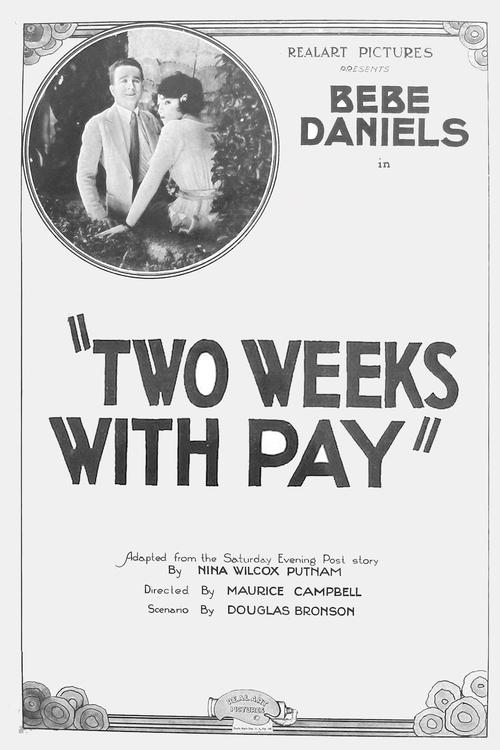
Two Weeks with Pay
1921
No user ratings available yet
Diversity score: 2.6 out of 10

1930
PassedDirector
Jack Raymond
Runtime
100 minutes
Average Rating
No ratings yetSynopsis
During World War I, Captain's wife Dorothy Glenister finds it hard being separated from her husband, so she travels to France to the village where he's stationed. Dorothy disguises herself as the daughter of a local, which leads to complications when she's suspected of being a German spy.
Overall Score
Limited
Category Breakdown
LGBTQ+ Representation
The film lacks any depiction of non-cisnormative identities or same-sex intimacy. The story centers entirely on a heteronormative marital relationship.
Gender Representation
Dorothy Glenister displays agency through her use of disguise to navigate a military environment. However, her motivations remain rooted in traditional domesticity and marital loyalty.
Racial & Ethnic Diversity
The narrative focuses on an Anglo-centric perspective within a French setting. There is no evidence of a multi-ethnic cast or non-white characters.
Religious & Cultural Diversity
The plot reinforces wartime patriotism and the importance of the nuclear family. It adheres to conventional social roles and nationalistic boundaries of the era.
Disability Representation
No visible or invisible disabilities are portrayed within the primary character arcs.
Strengths
Areas for Improvement
AI Analysis
French Leave is a product of its time, adhering strictly to the cinematic norms of 1930s British comedy. The narrative structure prioritizes traditional social hierarchies and wartime patriotism over any form of social subversion. While the female lead possesses tactical cleverness through her disguise, the film's core conflict is driven by domestic concerns and gendered expectations. The focus remains heavily on a homogeneous Western European social structure. Ultimately, the film offers little in the way of intersectional character development, functioning instead as a conventional comedy centered on national identity and marital duty.
1921
1931

1927

1930
1942
1917

1926

1945
1930

1940

1929

1935
No reviews yet. Be the first to share your thoughts on this movie!
Use the rating form above to leave a star rating and optional review.