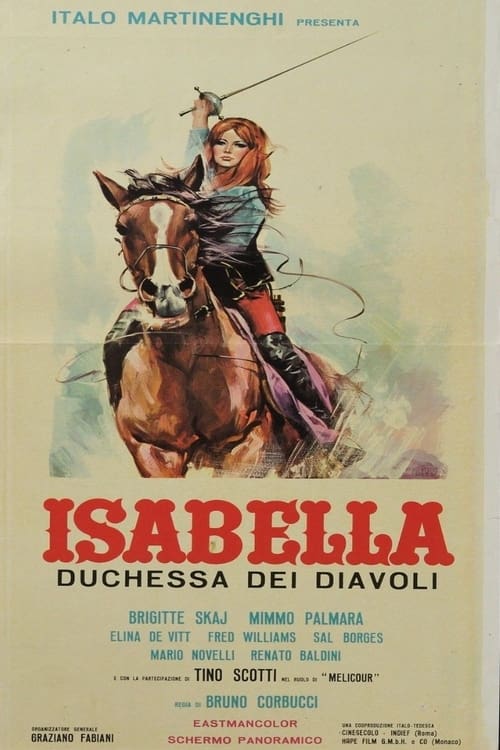
Isabella, Duchess of the Devils
1969
No user ratings available yet
Representation score: 1.7 out of 10

Representation Score
Limited
1954
ApprovedDirector
William Castle
Average Rating
No ratings yetNew Showbiz Analysis
The film is a typical mid-century adventure that follows traditional storytelling structures. It introduces themes of class struggle through a peasant revolt but does not challenge the social hierarchies of the time. Character motivations are driven by personal vengeance, which limits the exploration of deeper systemic or multi-layered issues. The narrative stays within the bounds of conventional 1950s genre clichés. Ultimately, the film operates as a period piece that emphasizes personal honor and romantic clichés over progressive social commentary or diverse representation.
Category Breakdown
The film does not include any representation of LGBTQ+ identities. The romantic relationship in the film is strictly heterosexual, focusing on the protagonist and the antagonist's daughter.
Male characters have significant roles in combat and leadership, while the female lead is mostly passive and serves as an emotional motivator.
The setting includes a clash of cultures and socioeconomic classes during a peasant revolt. However, Eastern motifs are used more for atmosphere than to give characters deeper ability to act.
The narrative centers on personal vengeance and individual honor, following traditional morality rather than exploring complex systemic or postmodern themes.
There are no characters with visible or invisible disabilities in the film.
Present on Screen
Limited or Absent
Official Synopsis
Based on the book of the same name by Frank Yerby. Pietro is an orphan who is raised by a family friend in 15th century Italy. When the friend is killed by the same nasty baron who murdered Pietro's father as he led the peasants in revolt against the baron's tyranny, Pietro vows vengeance against the entire family. This will prove difficult, since he's been in love with the daughter of the nasty baron since he was a child and wants to marry her.
1969
1924
1961
1925
1959
1959
1952
1952
No reviews yet. Be the first to share your thoughts on this movie!
Use the rating form above to leave a star rating and optional review.