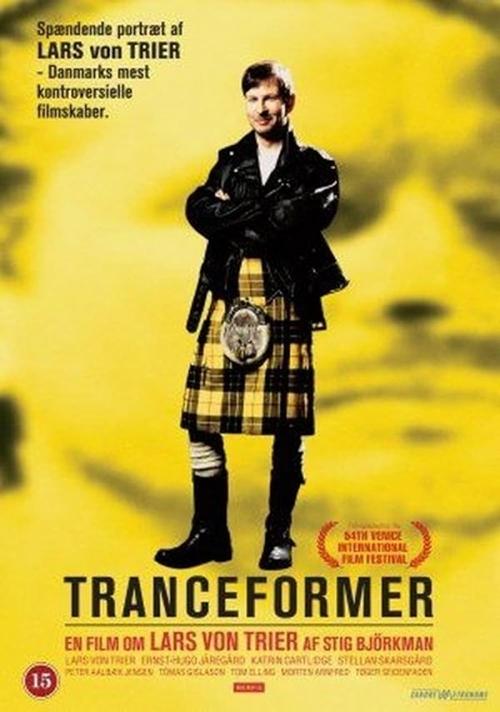
Tranceformer: A Portrait of Lars von Trier
1997
No user ratings available yet
Representation score: 7.6 out of 10

Representation Score
Good
1995
Director
Stig Björkman
Runtime
54 minutes
Average Rating
No ratings yetNew Showbiz Analysis
Stig Björkman’s documentary serves as a sophisticated deconstruction of mid-century social norms. It excels by framing the erosion of traditional hierarchies—specifically regarding gender and religious authority—as a necessary evolution toward a more liberated society. The film uses archival footage to challenge official histories, providing a nuanced look at how secularism and collective welfare reshaped human ability to act. While the film is culturally and gender-focused, it remains somewhat narrow in its scope, emphasizing the internal mechanics of the Swedish welfare state and limiting the depth of its exploration into broader racial and ethnic perspectives.
Category Breakdown
The film captures the changing attitudes towards sexuality in 1960s Sweden, highlighting early explorations of sexual identity and treating these shifts as integral to the era's development.
The documentary explores the breakdown of traditional gender hierarchies and the growing independence of women. It emphasizes the role of women in challenging patriarchal structures and the nuclear family.
The film uses newsreel footage to examine shifting racial perceptions in a historically homogeneous society. However, the narrative focuses primarily on the internal workings of the Swedish welfare state.
The narrative critiques traditional Western institutions by showing the decline of religious influence. It portrays the Swedish social democratic project as a secular alternative to unbridled capitalism and religious morality.
There is no evidence within the film's documentation to assess the representation of physical or neurodivergent disabilities.
Present on Screen
Limited or Absent
Official Synopsis
The Scandinavian entry in the BFI's Century of Cinema series of documentaries
1997

2003
1998

2006

2006

2009

1986

2018
No reviews yet. Be the first to share your thoughts on this movie!
Use the rating form above to leave a star rating and optional review.