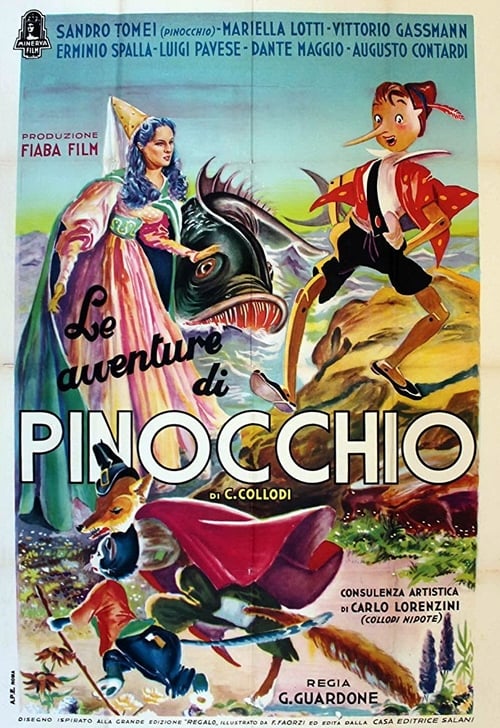
The Adventures of Pinocchio
1947
No user ratings available yet
Representation score: 4.2 out of 10
Representation Score
Fair
1972
Director
Luigi Comencini
Runtime
135 minutes
Average Rating
No ratings yetNew Showbiz Analysis
Luigi Comencini’s adaptation transforms the story from a whimsical fable into a gritty socioeconomic drama. It uses the fantasy framework to critique 19th-century Italian class structures and systemic corruption. While the film lacks modern demographic diversity, it excels in its cultural critique. It deconstructs institutional authority by framing the struggle of the individual against systemic exploitation as a central theme. The narrative’s strength lies in its moral complexity. It avoids simple fairy-tale clichés, instead presenting a world where the established system often acts as the primary antagonist.
Category Breakdown
The film follows traditional social structures of its 19th-century setting and does not include any non-straight or non-cisgender identities or narratives that challenge the assumption that everyone is straight or cisgender.
Female characters are mostly confined to maternal or supportive roles. The story reinforces traditional domestic hierarchies rather than challenging gendered power dynamics.
The cast is ethnically uniform, reflecting a homogeneous 19th-century Italian village. It stays strictly within its specific historical and geographical context.
The film provides a sophisticated critique of established institutions. It portrays authority figures, such as tax collectors, as predatory and corrupt within a complex social hierarchy.
Pinocchio’s status as a non-human entity serves as a metaphor for social alienation. This explores themes of 'otherness' and the struggle to integrate into society.
Present on Screen
Limited or Absent
Official Synopsis
Mastro Geppetto is a poor carpenter with no wife and no children. The man is very lonely, and after trading a piece of wood with his colleague Mastro Ciliegia, decides to build himself a puppet to keep him company.
1947
1951
1999
2001
1911
1940
2012
1939
No reviews yet. Be the first to share your thoughts on this movie!
Use the rating form above to leave a star rating and optional review.