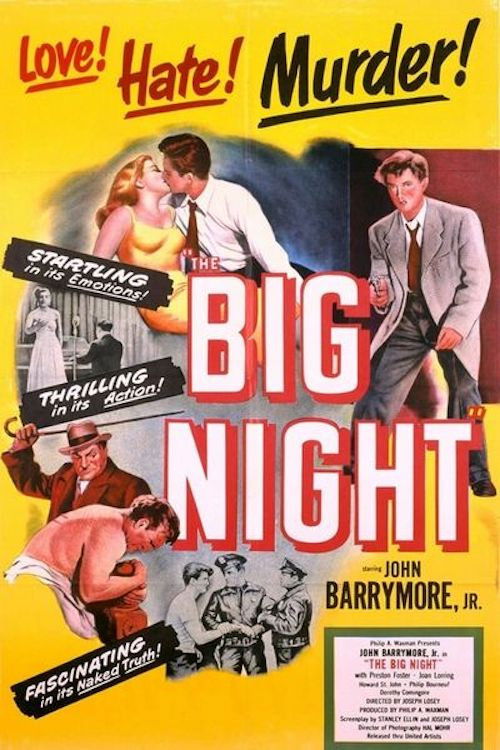
The Big Night
1951
No user ratings available yet
Representation score: 1.1 out of 10
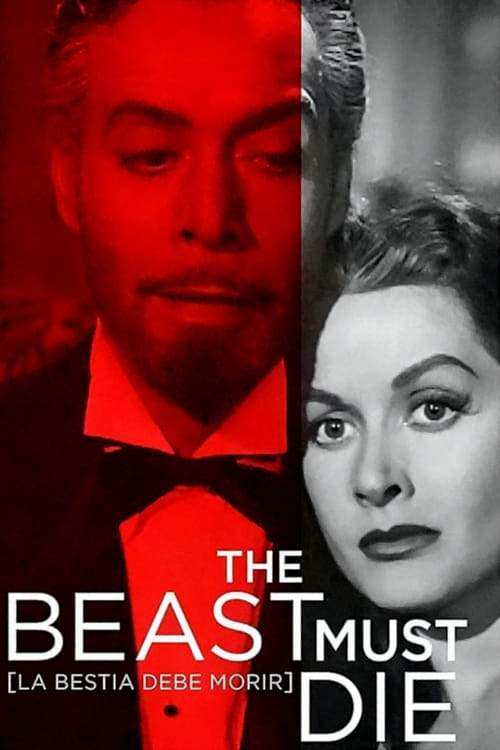
Representation Score
Minimal
1952
Director
Román Viñoly Barreto
Runtime
104 minutes
Average Rating
No ratings yetNew Showbiz Analysis
This film is a classic mid-century noir that emphasizes psychological tension and the mechanics of crime. It adheres closely to the social hierarchies and gendered clichés of its time, avoiding any systemic disruption. Narrative control is firmly placed within traditional masculine roles, while the setting remains a closed system of upper-class stability.
Category Breakdown
The film does not include any LGBTQ+ characters or representations of same-sex relationships.
Female characters are mostly shown in domestic settings or as victims. The main male character drives the story with traditional masculine roles.
The cast is predominantly white, reflecting the social structures of the 1950s. There are no characters of color with significant roles.
The story centers on the economic stability of the upper class. It upholds existing class hierarchies without challenging Western institutions.
The film does not feature any characters with visible or invisible disabilities, nor does it use disability as a central plot element.
Present on Screen
Limited or Absent
Official Synopsis
A crime writer searching for the truth about a personal tragedy becomes involved in a murder investigation.
1951
1969
1950

1958
1957
1955
1980
1942
No reviews yet. Be the first to share your thoughts on this movie!
Use the rating form above to leave a star rating and optional review.