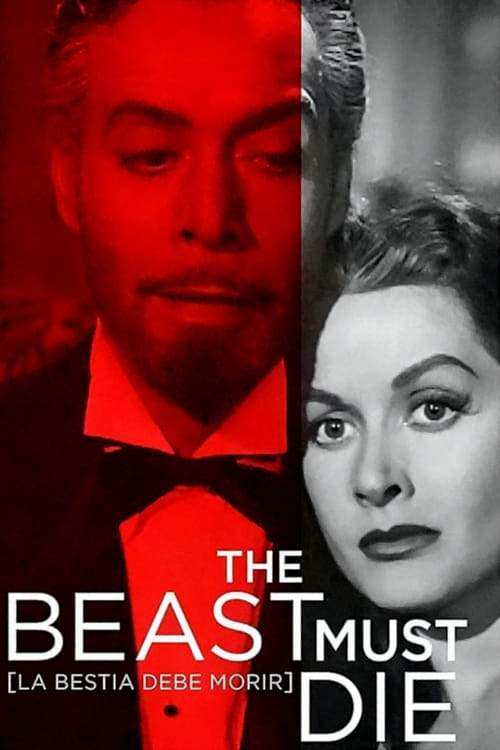
The Beast Must Die
1952
No user ratings available yet
Representation score: 0.5 out of 10
Representation Score
Minimal
1951
ApprovedDirector
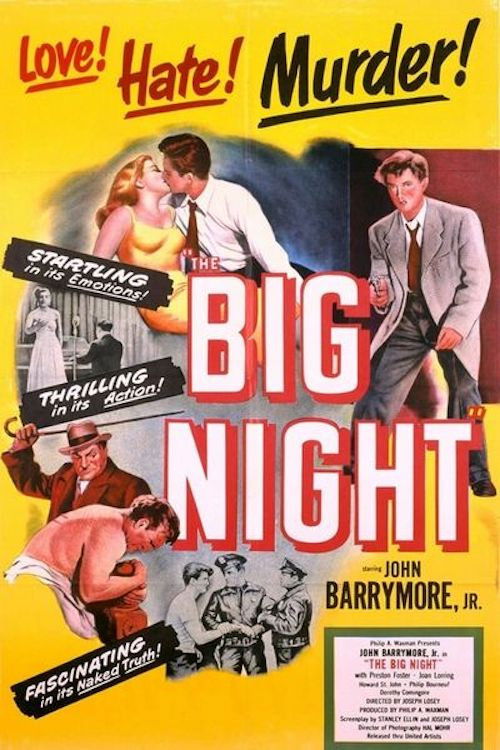
Joseph Losey
Runtime
75 minutes
Average Rating
No ratings yetNew Showbiz Analysis
The Big Night is a gritty portrayal of class-based social realism set in the underworld of Los Angeles. While it lacks diverse representation across race, gender, and orientation, it effectively critiques systemic social structures. The film adheres closely to the demographic norms of its 1951 setting, featuring a homogeneous, white, working-class cast and masculine-dominated environments. Ultimately, the film's strength lies in Joseph Losey's exploration of social friction and hierarchy, rather than its broad representation of diverse identities.
Category Breakdown
The film does not include any documented LGBTQ+ characters or non-cisgender identities. The social interactions focus on traditional relationships without any clear queer themes.
The story emphasizes masculine-dominated settings, particularly the aggressive world of boxing. Gender roles follow traditional patterns with little challenge to conventional expectations.
The cast and setting are predominantly white and represent a homogeneous working-class demographic. Characters of color have limited influence on the plot within this mid-century backdrop.
The film explores class struggles and critiques social hierarchies through social realism. It examines how community activities and social divisions reinforce societal structures.
There are no characters with visible or invisible disabilities featured in the narrative. The focus remains on the physical abilities of the main characters.
Present on Screen
Limited or Absent
Official Synopsis
A young man zigzags through the sordid vortex of downtown Los Angeles while seeking vengeance on the man that beat his father.
1952
1951
1951

1958
1950

1960

1956
1955
No reviews yet. Be the first to share your thoughts on this movie!
Use the rating form above to leave a star rating and optional review.