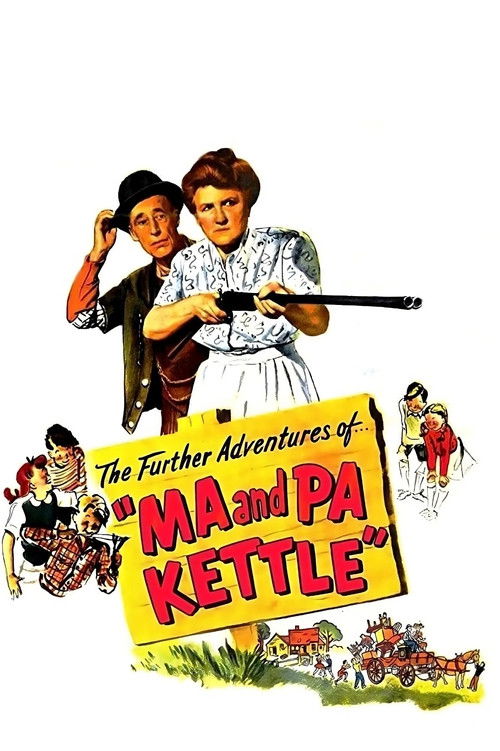
Ma and Pa Kettle
1949
No user ratings available yet
Representation score: 0.4 out of 10

Representation Score
Minimal
1939
ApprovedDirector
Herbert I. Leeds
Runtime
63 minutes
Average Rating
No ratings yetNew Showbiz Analysis
Chicken Wagon Family is a conventional 1939 comedy that prioritizes traditional social and familial hierarchies. The narrative structure focuses on the integration of a nomadic family into the established order of New York City, reinforcing the status quo of the period. The film lacks meaningful diversity, centering instead on a homogeneous family unit and traditional romantic storylines. It functions as a standard genre piece that emphasizes stability and institutional norms rather than challenging social frameworks. Ultimately, the film offers little representation for underrepresented groups, instead adhering to the era's standard commercial conventions and social structures.
Category Breakdown
The film follows a strictly heterosexual romantic storyline, focusing on a relationship between a male police officer and a female family member.
Female characters express a desire for domestic stability, but the resolution depends on a male authority figure providing security, reinforcing traditional gender roles of the time.
The story centers on a homogeneous Western family unit. There is no indication of a multi-ethnic cast or characters from underrepresented racial groups.
The narrative emphasizes the pursuit of the American Dream and social integration. It focuses on the transition from rural life to established urban institutions.
The film contains no visible or invisible representations of characters with disabilities.
Present on Screen
Limited or Absent
Official Synopsis
Addie Fippany, her father Jean Paul Batiste Fippany, her mother Josephine and her sister Cecile roam the country-side in a mule-drawn wagon, trading trinkets to farmers for chickens which they sell in the cities. Addie and her father love the care-free life, but Mrs. Fippany and Cecile want to settle down in New York City. As soon as the "chicken wagon family" reaches New York, Addie gets into mischief and a policeman, Matt Hibbard, helps her and falls in love with Cecile. He helps the family settle into a deserted firehouse which is up for public sale.
1949

1934
1940
1928
1937
1927
1938
1952
No reviews yet. Be the first to share your thoughts on this movie!
Use the rating form above to leave a star rating and optional review.