
The Audience
1972
No user ratings available yet
Diversity score: 4.2 out of 10
1991
Director
Raúl Ruiz
Runtime
83 minutes
Average Rating
No ratings yetSynopsis
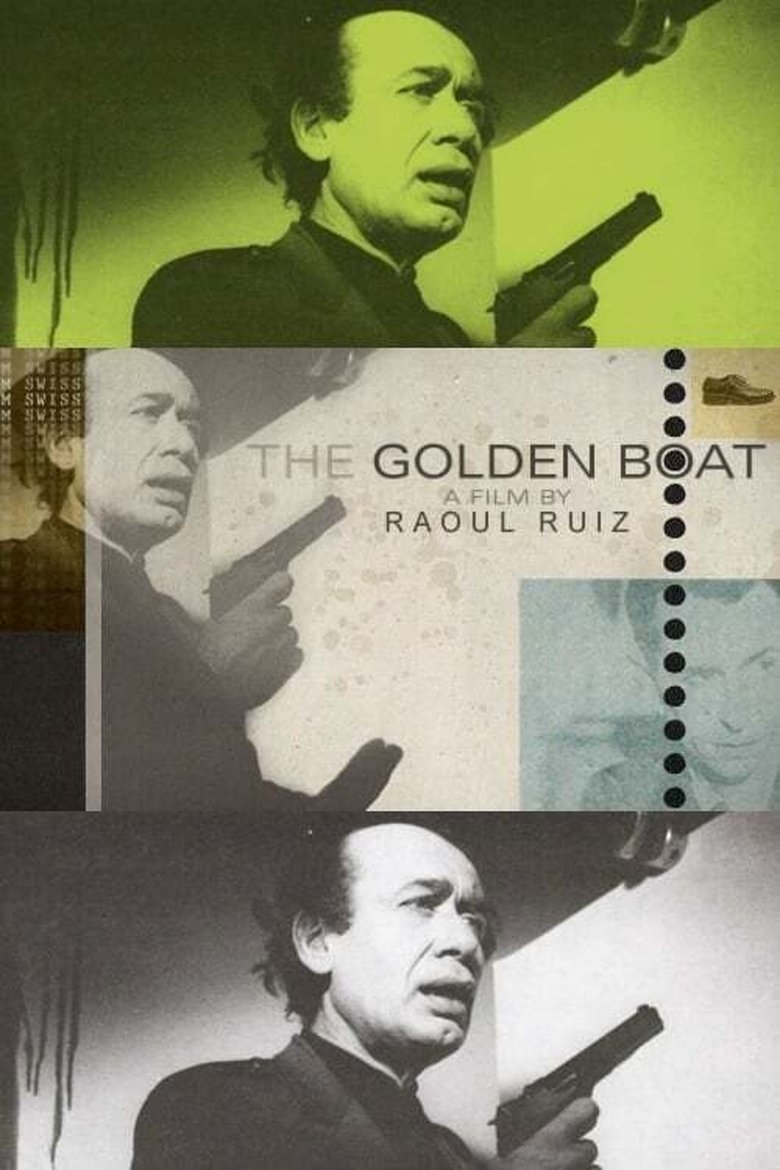
Inspired in form by American police TV shows and soap operas, The Golden Boat is a madcap, surreal dash through the streets of New York city, telling the mysterious and often hilarious story of an aged street-person named Austin, a comically compulsive assassin, as he joins up with a young rock critic and philosophy student named Israel Williams. In the course of their adventures, Austin pursues his object of desire - a Mexican soap opera star - and along the way engages a host of TV characters and bit players, whose repartee range from gangsterish insults to the question of God's existence.
Overall Score
Fair
Category Breakdown
LGBTQ+ Representation
The film utilizes surrealism and dream-logic to destabilize fixed identities. While it avoids centering queer intimacy, its fluid character perspectives suggest a departure from heteronormative archetypes.
Gender Representation
The narrative disrupts traditional hierarchies by prioritizing existential wandering over domestic roles. It eschews standard archetypes, though specific gendered power dynamics remain obscured by the non-linear structure.
Racial & Ethnic Diversity
A Mexican soap opera star provides a cross-cultural element to the protagonist's journey. This introduces international touchstones within the New York setting, though the broader cast composition is unclear.
Religious & Cultural Diversity
The film excels by critiquing Western storytelling and social structures through a fragmented reality. Dialogue explores moral relativism and the existence of God, favoring a pluralistic worldview.
Disability Representation
Characters exhibit compulsive behaviors and existential wandering. It is difficult to distinguish between stylistic eccentricity and neurodivergence, as there is no explicit, agency-driven representation of disability.
Strengths
Areas for Improvement
AI Analysis
Raúl Ruiz’s postmodern approach prioritizes ontological instability over demographic checklists. The film’s strength lies in its systemic rejection of authoritative, cohesive storytelling, which inherently undermines traditional social norms. While the film introduces international elements through its Mexican character, it lacks specific evidence of deep racial or LGBTQ+ centering. The representation is more about the subversion of identity than the celebration of specific groups. Ultimately, the work functions as a critique of Western narrative cohesion. It favors a fragmented, relativistic reality that challenges the certainty of institutional and social hierarchies.
1972

2001

2014

1982

2007

1984

1985
1976

1964

1988
2006

1997
No reviews yet. Be the first to share your thoughts on this movie!
Use the rating form above to leave a star rating and optional review.