The Party and the Guests
1966
No user ratings available yet
Representation score: 5.7 out of 10
Representation Score
Fair
1972
Director
Marco Ferreri
Runtime
108 minutes
Average Rating
No ratings yetNew Showbiz Analysis
Marco Ferreri’s satire prioritizes philosophical inquiry over broad demographic representation. The film excels in cultural critique, using its premise to challenge the stability of modern institutions and the commodification of human connections. However, the work remains demographically narrow. It lacks LGBTQ+ representation and racial diversity, reflecting the specific European context of its era without attempting to challenge those boundaries. Ultimately, the film explores systemic alienation, trading traditional representation for a deep, postmodern examination of how modern structures fragment individuals.
Category Breakdown
The film does not include any LGBTQ+ characters or stories. Relationships in the film stay within traditional heterosexual norms, focusing on a single transactional relationship.
The film challenges traditional domestic roles by depicting the female character as a professional service provider rather than a submissive partner. However, limited interactions between characters make it hard to fully assess the female character's role.
The cast and setting are primarily white and European. The film operates within a homogeneous demographic framework typical of 1970s Italian cinema.
The film offers a sophisticated critique of Western modernity and capitalist alienation. It uses existential absurdity to question the stability of modern social and religious structures.
The protagonist's psychological eccentricity is framed as existential absurdity rather than a study of neurodivergence. There is no dedicated focus on disability or neurodivergence.
Present on Screen
Limited or Absent
Official Synopsis
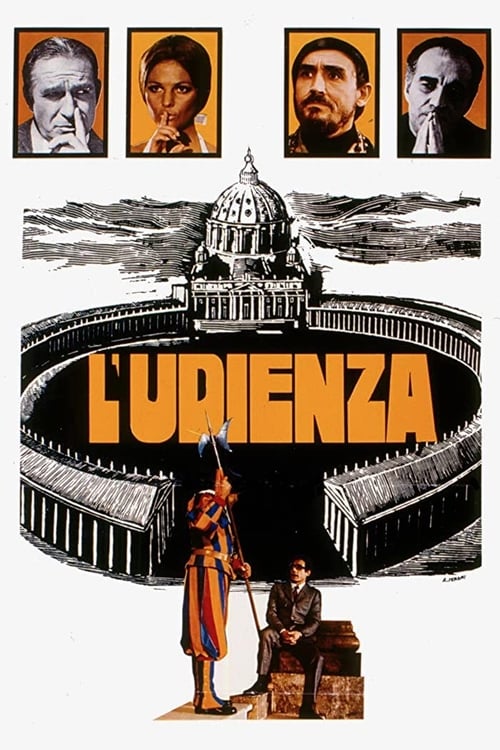
Caustic satire on bureaucracy of the Vatican authority and a simple Italian who wants to achieve the audience with the Pope.
1966
1977
1970
1965
1964

1972
1995
1971
No reviews yet. Be the first to share your thoughts on this movie!
Use the rating form above to leave a star rating and optional review.