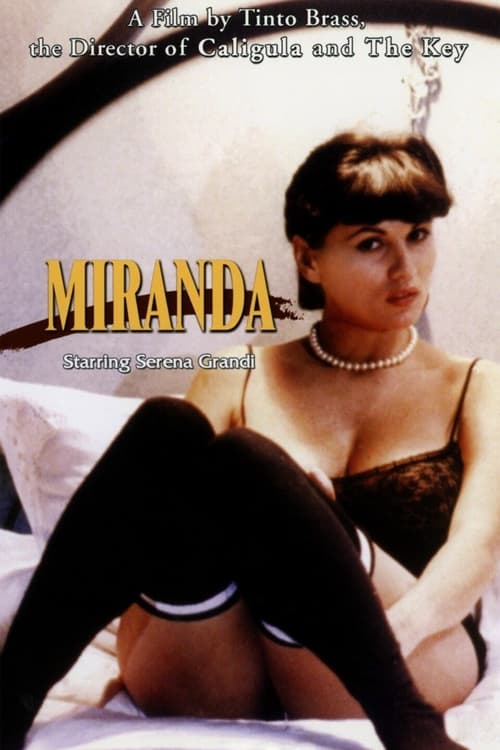
Miranda
1985
No user ratings available yet
Diversity score: 4.3 out of 10

1988
RDirector
Tinto Brass
Runtime
98 minutes
Average Rating
No ratings yetSynopsis
While his girlfriend recovers from a medical procedure, a corrupt lawyer becomes entranced by the grand visions of a mob boss.
Overall Score
Fair
Category Breakdown
LGBTQ+ Representation
The film focuses on heteronormative eroticism and traditional sexual adventures. There is no explicit evidence of queer-specific narratives or non-cisnormative gender identities.
Gender Representation
Women in the film exercise significant sexual autonomy, subverting the trope of the submissive female. However, the work lacks parity in intellectual or leadership roles.
Racial & Ethnic Diversity
The casting appears predominantly homogeneous, reflecting the European setting of Budapest. There is no evidence of a diverse, multi-ethnic ensemble.
Religious & Cultural Diversity
The narrative prioritizes sexual liberation and individual pleasure over religious or moral frameworks. It functions as a critique of restrictive social constraints.
Disability Representation
Disability is not a central theme. There is no evidence of characters with disabilities being used as primary plot devices.
Strengths
Areas for Improvement
AI Analysis
Snack Bar Budapest is a study of erotic liberation that prioritizes sensory experience over traditional narrative structures. It succeeds in challenging social taboos by centering on sexual autonomy and the rejection of conventional morality. However, the film is limited by its narrow demographic scope. The casting remains largely homogeneous, and the narrative architecture is built primarily around heteronormative dynamics, which restricts its intersectional breadth. Ultimately, while the film subverts certain gendered tropes of passivity, it lacks the diverse identity-based representation necessary for a higher score.
No reviews yet. Be the first to share your thoughts on this movie!
Use the rating form above to leave a star rating and optional review.